How to share experiences nearby with Apple Vision Pro | Apple Support

I want to share Apple Vision Pro experiences with others using visionOS 26; first I update my headset and confirm any Apple Vision Pro I’ll share with is on the latest OS.

Next I make sure nearby devices are on the same Wi‑Fi network and have Bluetooth enabled.

To watch movies together everyone needs a subscription to the same content, and to play spatial games each person must install the same SharePlay‑enabled game.

Then I open the app or 3D object, look to the bottom of the window for sharing controls, and choose to invite people nearby or connect remotely over FaceTime.

  • Update all Apple Vision Pro devices to visionOS 26.
  • Ensure nearby devices share the same Wi‑Fi and have Bluetooth on.
  • Match subscriptions for shared media and install the same SharePlay games.
  • Open the content or 3D object and access sharing controls at the bottom of the window.
  • Invite people nearby or start a FaceTime share to connect remotely.
How to use Live Translation on iPhone and with your AirPods | Apple Support

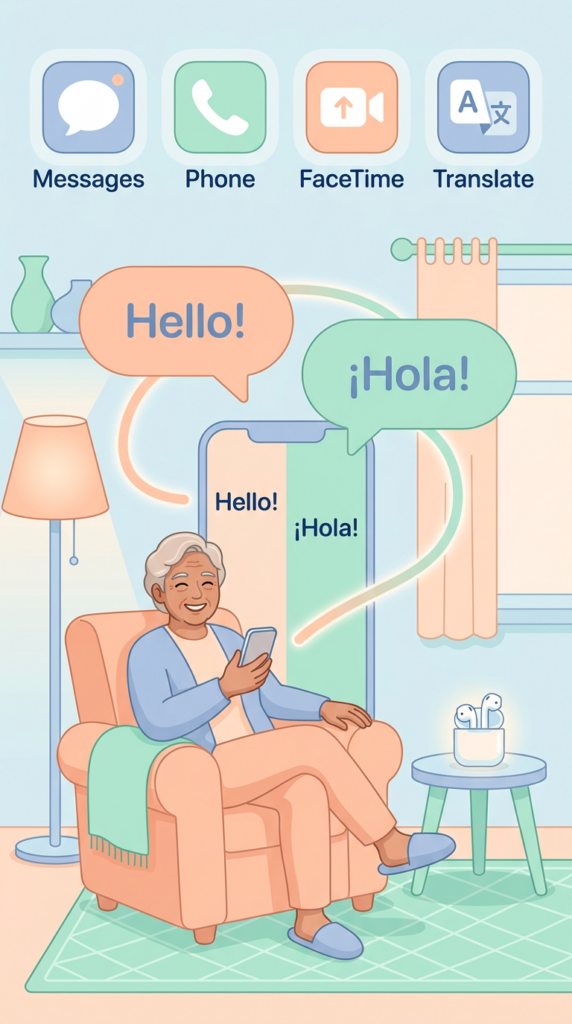
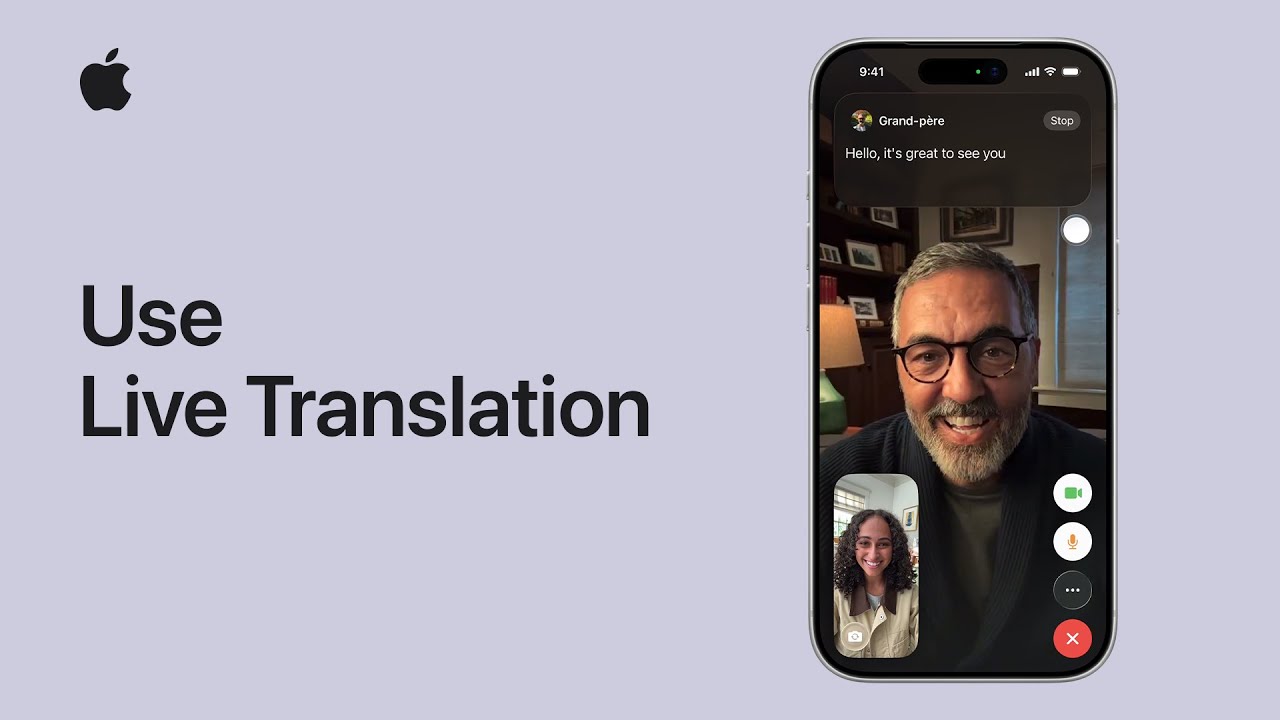
I want to translate messages, calls, FaceTime, or in-person conversations; here’s how I do it.

First I ensure my iPhone runs iOS 26 and Apple Intelligence is on. In Messages I tap the contact, enable Automatically Translate, pick the source language, then type and send — translations appear as I write and my contact gets them.

During a call I tap More, choose Live Translation, pick the language, and Start Translation for live spoken translation.

In FaceTime tap More and start Live Translation for captions.

For in-person I update my AirPods, open Translate, set up Live, pick a language, start.

  • Ensure iPhone runs iOS 26 and Apple Intelligence is enabled.
  • In Messages: enable Automatically Translate in the contact, choose language, type and send (translations appear as you type).
  • During phone calls: tap More → Live Translation → choose language → Start Translation for live spoken translation and onscreen transcription.
  • In FaceTime: tap More → Start Live Translation for live captions.
  • For in-person conversations: update compatible AirPods, open Translate → Live → Set Up Live Translation → choose language → Start.

How to use widgets on Apple Vision Pro | Apple Support

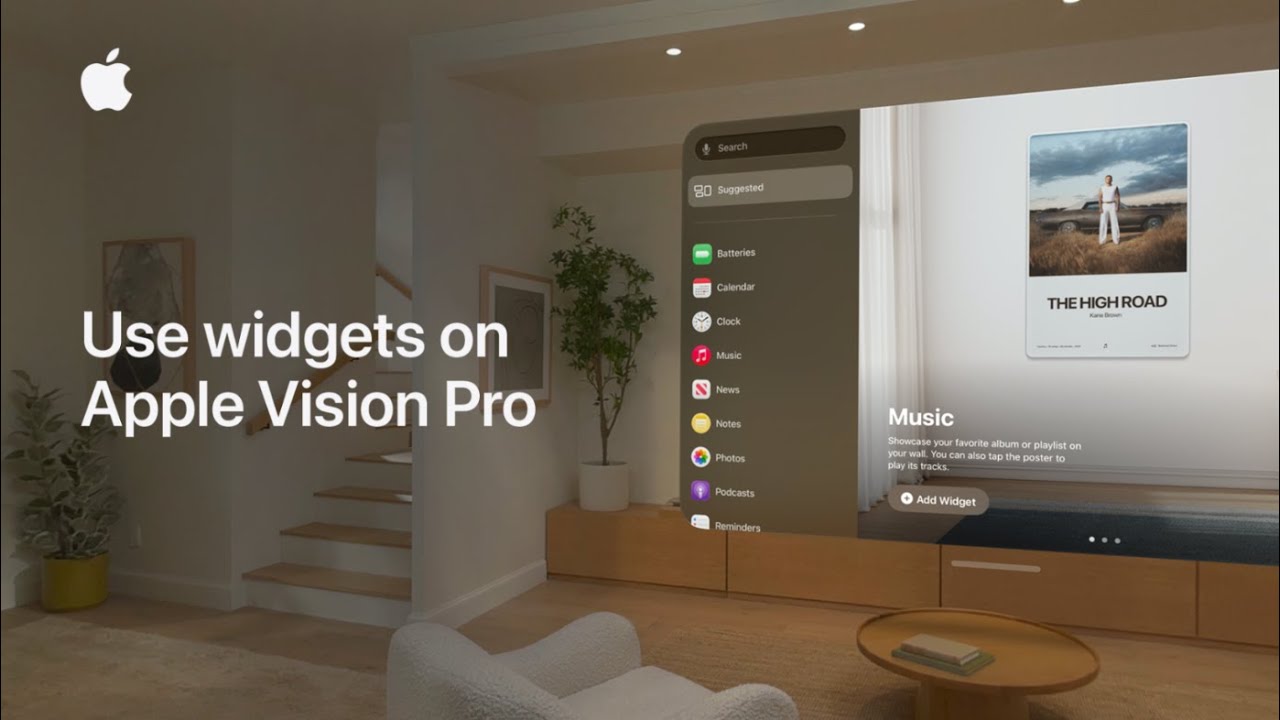
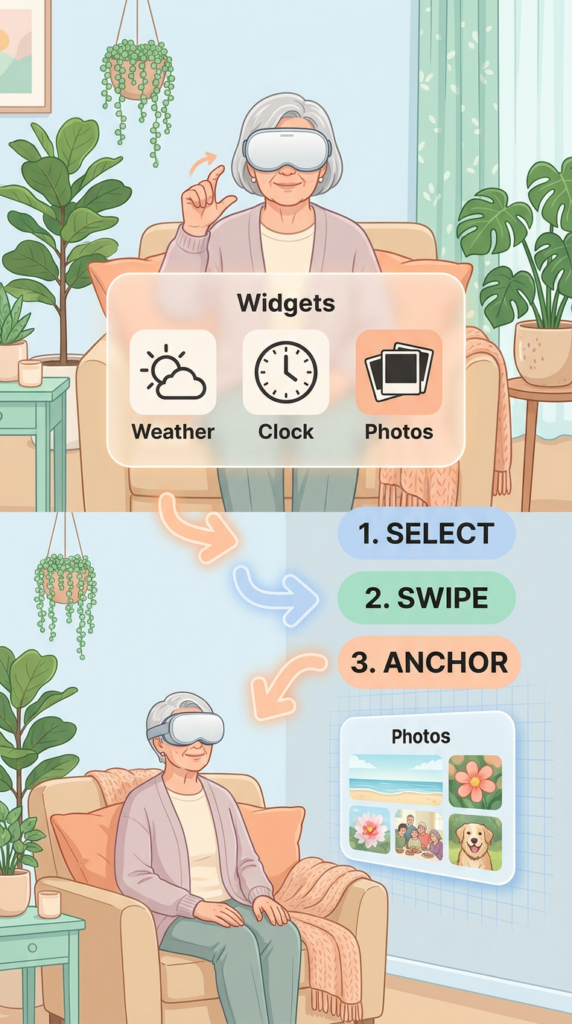
I show you how I add and customize widgets in visionOS 26: first I tap Widgets app in Home View to see suggested widgets or pick an app from the list on the left.

Next I choose Photos and swipe through options like panoramas, spatial photos, or posters until I find one I like. I tap the widget to add it to my space, anchor it to the wall where I want it, and use customization controls to adjust size and appearance.

Once set, the widget integrates into my space and reappears again every time I put on Apple Vision Pro.

  • Tap the Widgets app in Home View to begin.
  • Browse suggested widgets or select an app from the left-hand list.
  • For Photos, swipe through panoramas, spatial photos, or posters to choose a style.
  • Tap the chosen widget to add it, then anchor it to the wall and adjust size/appearance.
  • The widget stays integrated in your space and reappears every time you wear Apple Vision Pro.

How to use Call Screening on iPhone | Apple Support

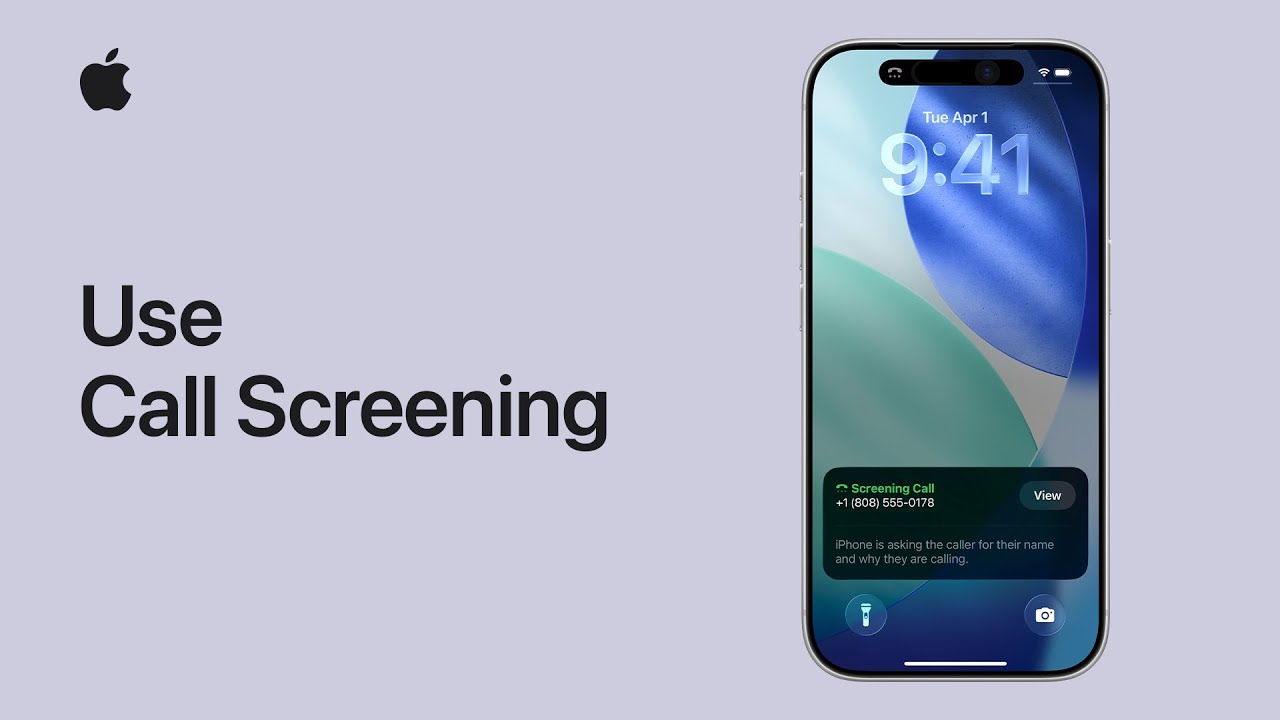
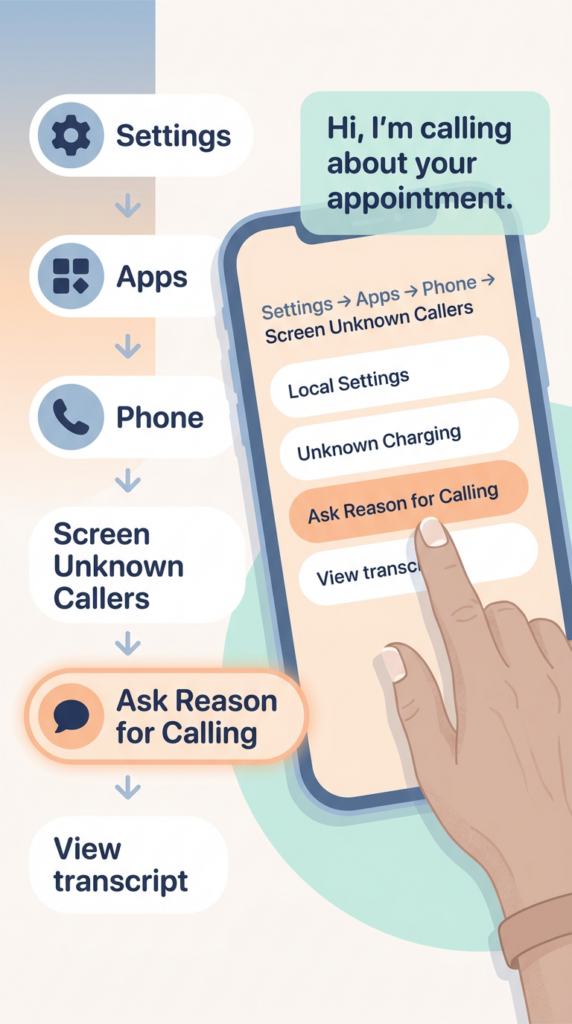
Starting in iOS 16, I can show you how to find out exactly who is calling before you ever pick up the phone. First, open your Settings, tap Apps, and use the search bar to find the Phone app.

Once there, scroll down to the Screen Unknown Callers section and select Ask Reason for Calling. Now, when an unknown number calls, your iPhone will ask for their name and purpose. Simply tap View to read a live transcript of their response.

Finally, you can type a reply, use a suggested message, or slide to answer whenever you’re ready.

  • Open Settings, navigate to Apps, search for the Phone app, and select the Screen Unknown Callers section.
  • Enable the “Ask Reason for Calling” feature to have your iPhone automatically prompt unknown callers for their information.
  • Once a call is being screened, tap the View button to read a live, real-time transcript of what the caller is saying.
  • Interact with the caller without picking up by typing a custom reply or choosing from a list of suggested quick messages.
  • Stay in control of the conversation by sliding to answer the call at any moment once you’ve confirmed who is on the line.

How to use AirDrop on iPhone and iPad | Apple Support

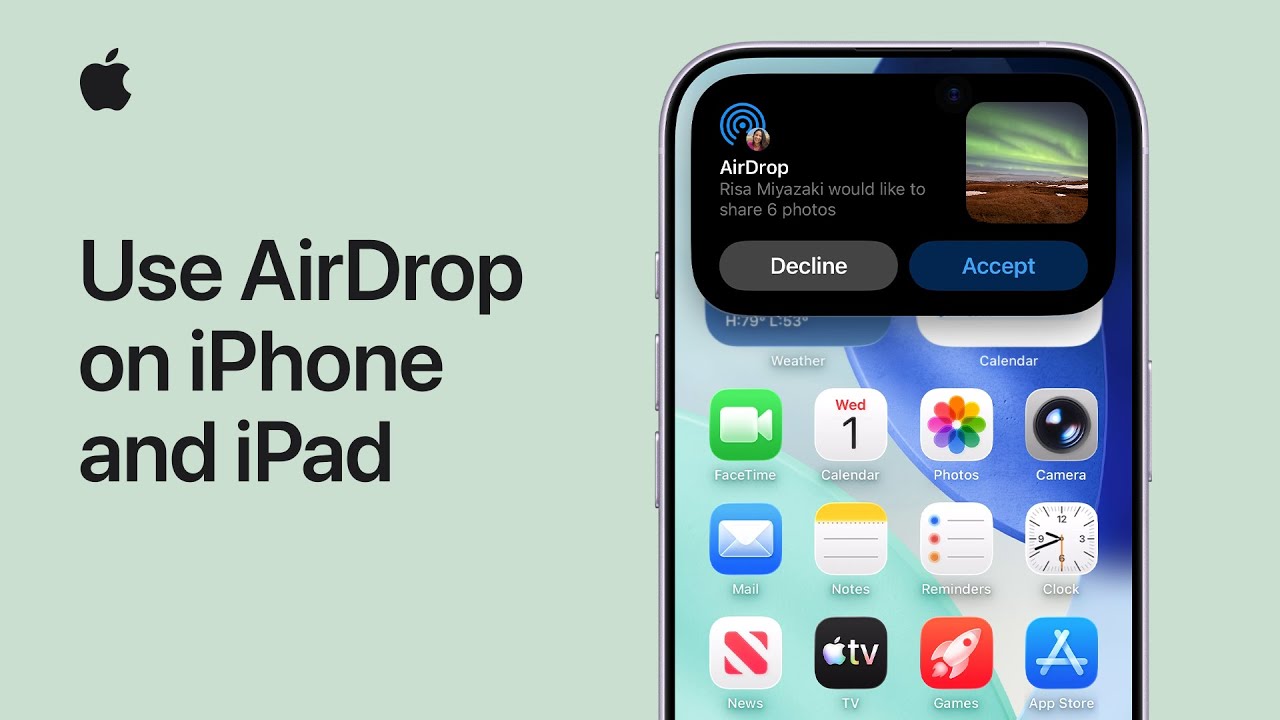
I use AirDrop to quickly send photos, long videos, or large files by first making sure the person is nearby and that we both have Wi‑Fi and Bluetooth on, turning off Personal Hotspot if needed.

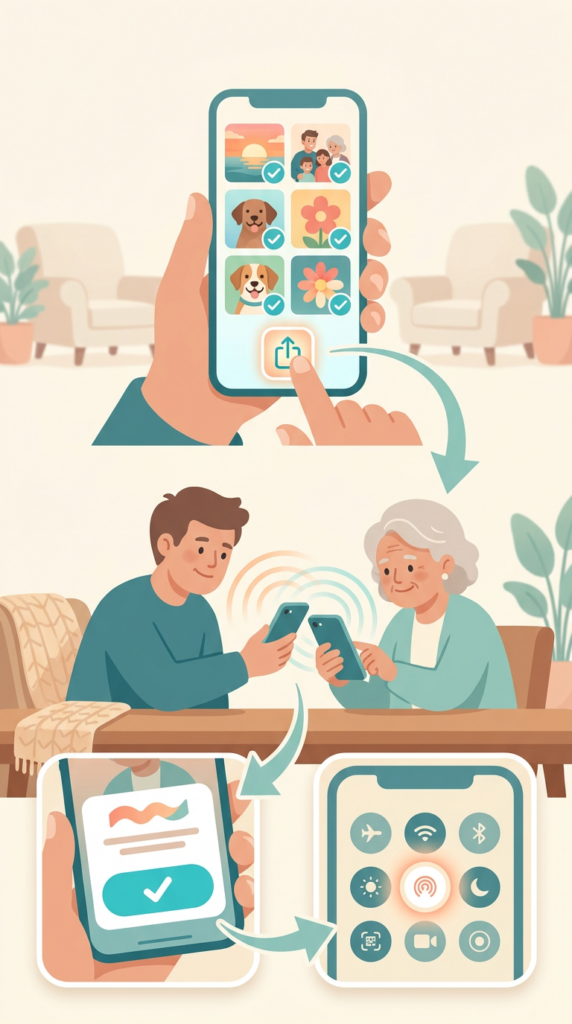
If we both have iOS 17 or later, I open the file I want to share, tap the Share button, choose AirDrop, and move my iPhone close to the other device.

I tap the contact’s name and wait for the devices to connect; the recipient taps Accept, and the item opens automatically in a supported app.

To share with someone not in my contacts, I ask them to open Control Center, touch the Connectivity controls, tap AirDrop, and choose a receiving option.

  • Make sure you’re nearby and both devices have Wi‑Fi and Bluetooth on; turn off Personal Hotspot if needed.
  • Open the file, tap Share, choose AirDrop, and bring your iPhone close to the other device.
  • Tap the recipient’s name under People and wait for the devices to connect.
  • Recipient taps Accept; the shared item opens automatically in a supported app.
  • For people not in Contacts, have them open Control Center → touch Connectivity controls → AirDrop and select an option.

How to customize Home View on Apple Vision Pro | Apple Support

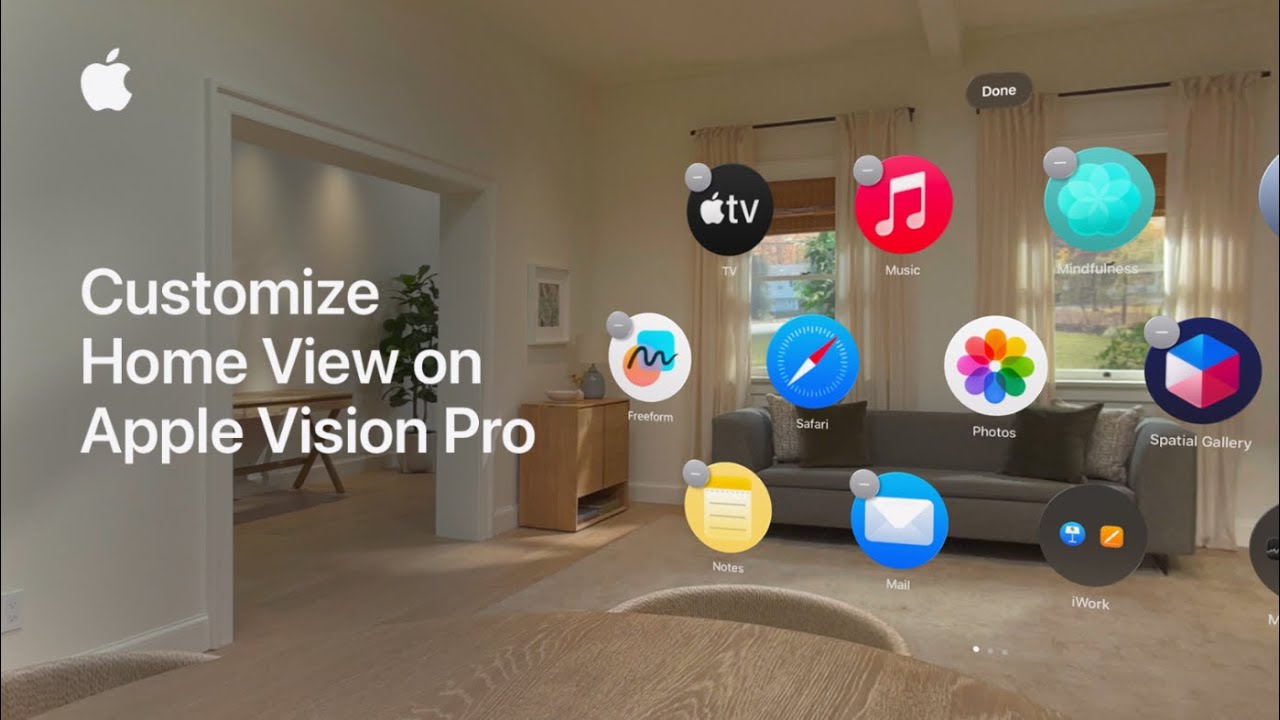
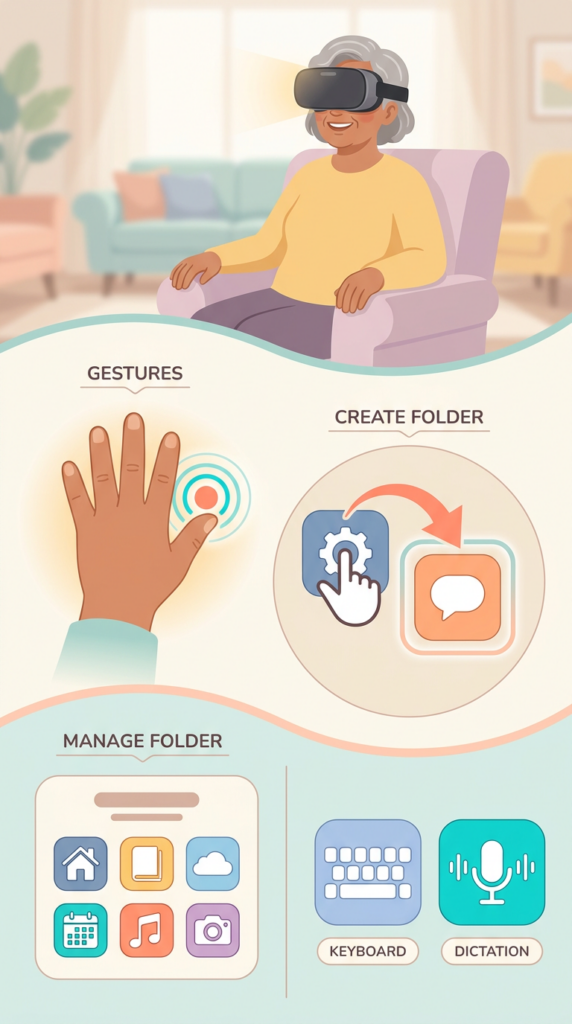
I customize Home View on my Apple Vision Pro (visionOS 26) by opening Home View — press the Digital Crown or use the gesture: look at my hand with the palm facing me and tap my fingers together.

To rearrange, I look at an app, pinch and hold my thumb and finger until the icons jiggle, then drag an app onto another to create a folder.

I can mix visionOS and compatible iPhone/iPad apps in the same folder.

The folder is named automatically; I open it, tap the name to edit, and rename using the virtual keyboard, Magic Keyboard, or dictation.

  • Open Home View: press the Digital Crown or use the hand gesture (palm facing you, tap fingers together).
  • Enter edit mode: look at an app, pinch and hold until icons jiggle.
  • Create a folder: pinch and drag one app onto another.
  • Mix apps: include visionOS apps and compatible iPhone/iPad apps together.
  • Rename folder: open it, tap the name, and use the virtual keyboard, Magic Keyboard, or dictation.

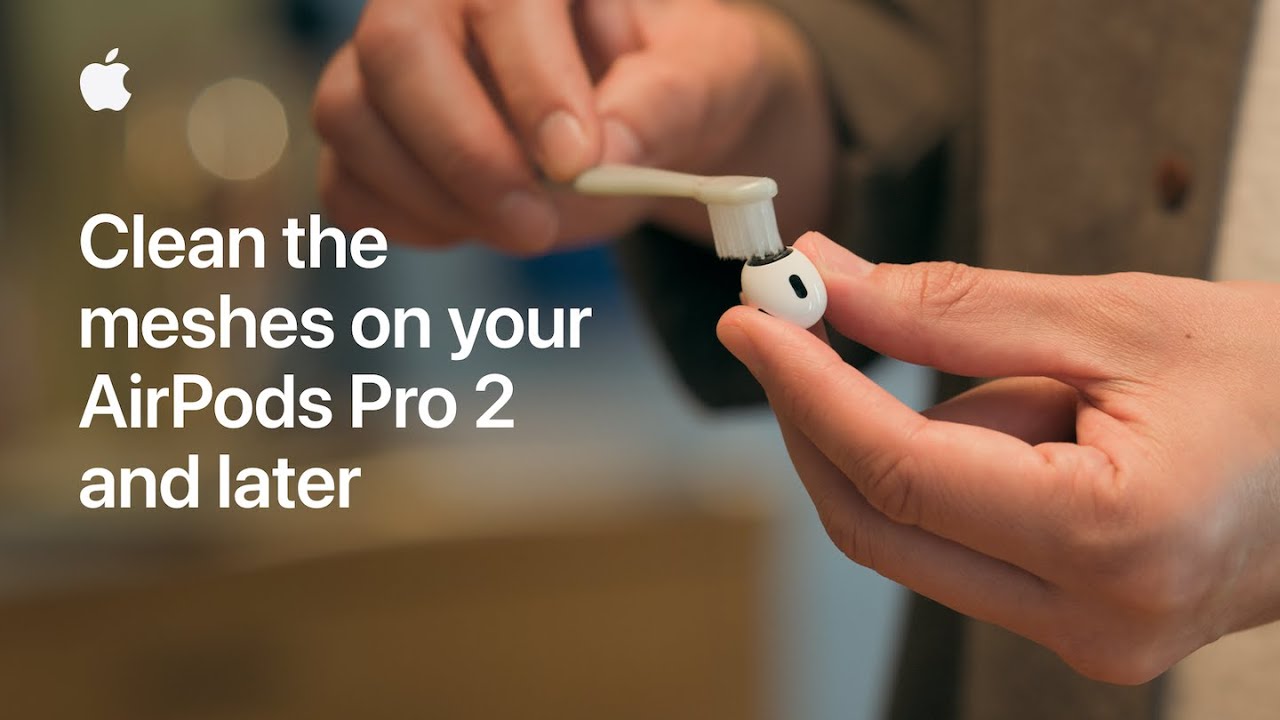
How to clean the meshes on your AirPods Pro 2 and later | Apple Support

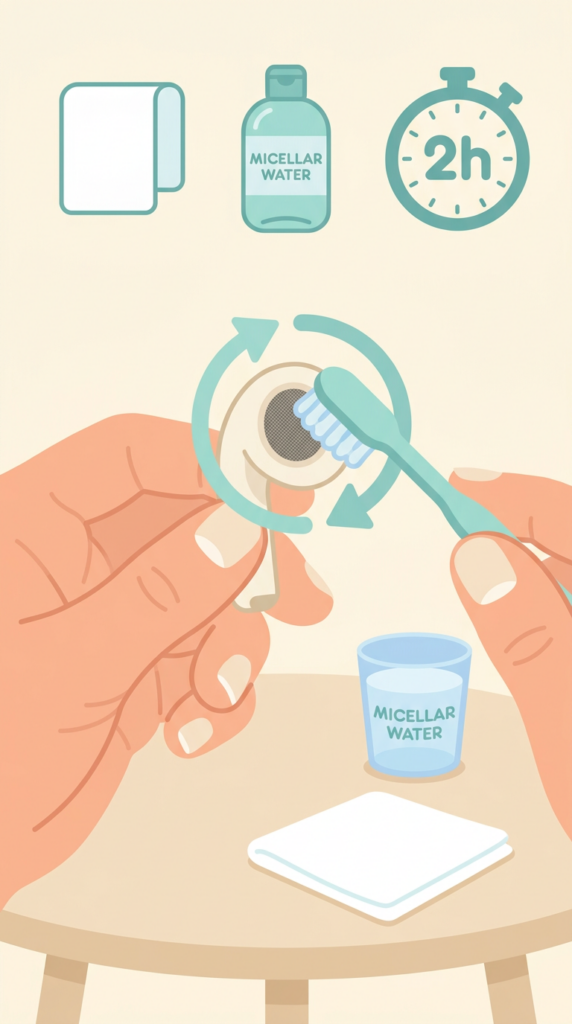
I clean the meshes on my AirPods Pro 2 (top and sides) or Pro 3 (top, sides, bottom) using micellar water and a soft-bristled children’s toothbrush.

First, I remove the ear tip and rinse it under running water (no soap). I pour micellar water into a cup, dip the brush, and brush each mesh in circles for 15 seconds, blotting on a paper towel, then repeat that cleaning three times.

Next I rinse the brush in distilled water, brush each mesh once with distilled water and blot, then let the AirPods air-dry for at least two hours before reattaching tips or using them.

  • Remove ear tip; rinse tip under running water (no soap).
  • Dip soft-bristled brush in micellar water and brush each mesh 15 seconds.
  • Blot mesh on paper towel; repeat micellar cleaning three times.
  • Rinse brush in distilled water; brush each mesh once with distilled water and blot.
  • Air-dry AirPods at least two hours before reattaching tips or using.

How to get the best fit with your AirPods Pro 3 | Apple Support

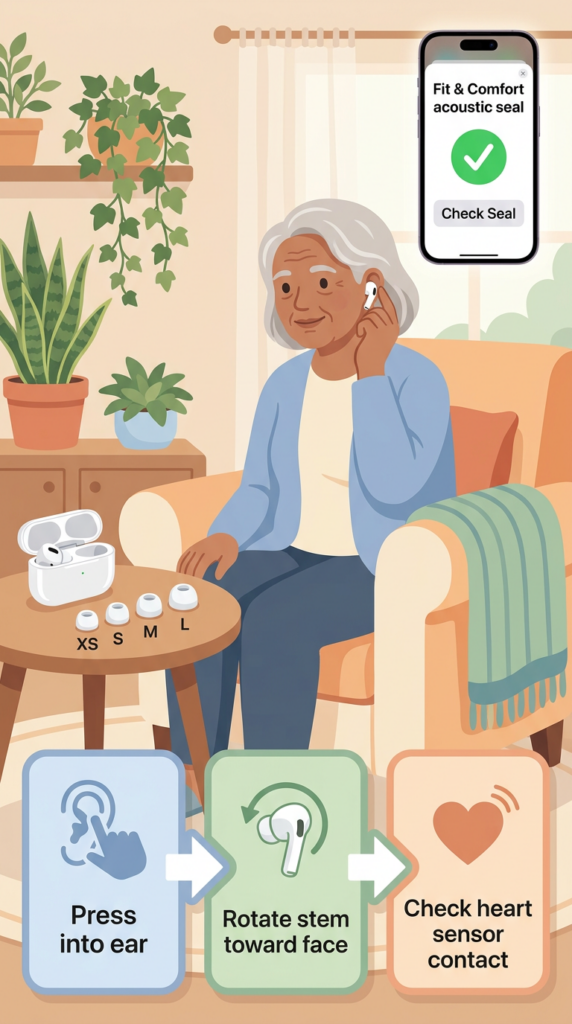
I fit my AirPods Pro 3 with the medium tips and point the heart sensors forward.

I press them into my ears and rotate the stems toward my face until the fit feels snug and sensors contact my skin.

If they’re loose or cause pressure, I try a different tip—grip the base to pull off (use a clean cloth or roll the edge inside-out for better grip) and attach the new tip until it clicks.

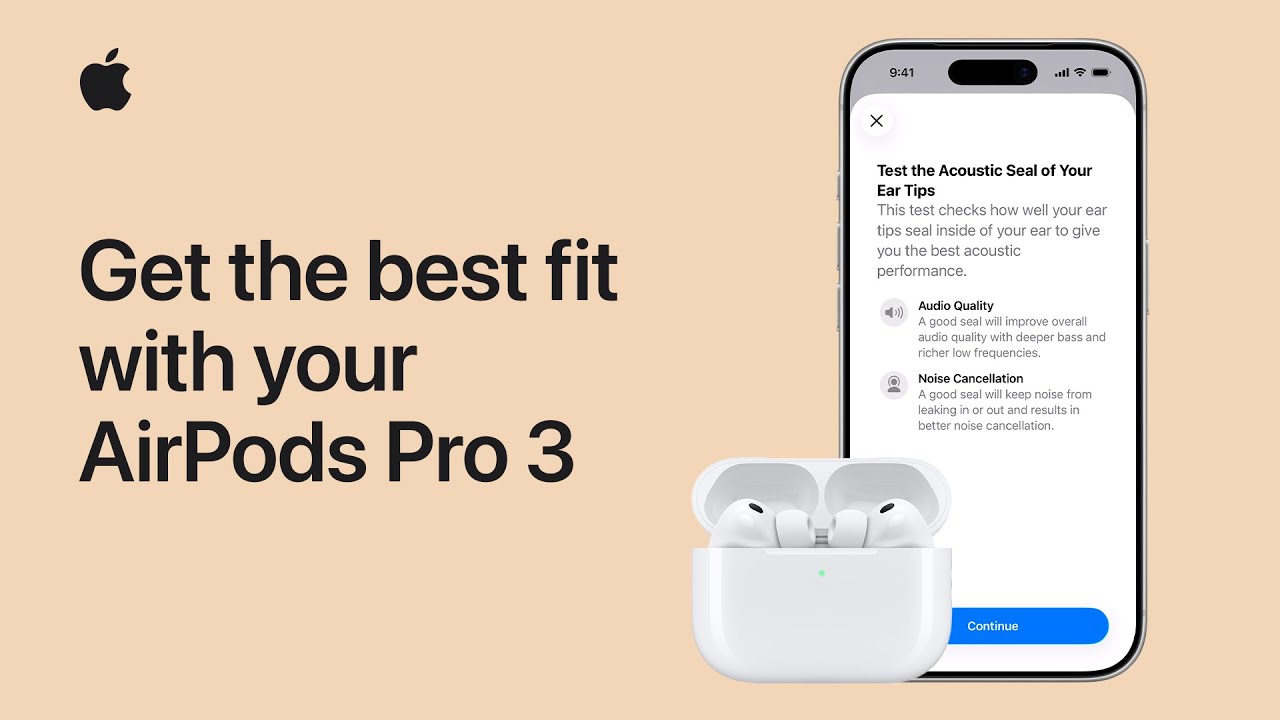
Then I run the Fit & Comfort acoustic seal test on my iPhone to confirm optimal sound and noise cancellation for best overall everyday performance.

  • Start with medium tips, sensors facing forward; insert and rotate stems for a snug fit.
  • If fit is loose or uncomfortable, try a different tip size.
  • Remove a tip by gripping the base (use cloth or roll edge inside-out if needed).
  • Attach a tip by aligning and pushing until it clicks.
  • Run the Fit & Comfort acoustic seal test on your iPhone to verify sound and noise cancellation.

How to get the best fit wearing Apple Vision Pro | Apple Support

To adjust my Apple Vision Pro for the best fit, I start by loosening the straps and holding the device by the frame, never by the Light Seal, Audio Straps, or power cable.

I slide the band over my head so the lower strap rests on the back of my head, then turn the Fit Dial clockwise to tighten until it feels snug. Next, I pull the Fit Dial out and tighten the upper strap, adjusting the band’s position up or down on my head as needed.

I fine-tune with the Fit Dial until I feel balanced support between my forehead and cheeks, ensuring a comfortable fit.

  • Always hold Apple Vision Pro by the frame, not the Light Seal, Audio Straps, or power cable
  • Slide the band over your head with the lower strap resting on the back of your head
  • Turn the Fit Dial clockwise to tighten and counterclockwise to loosen the straps
  • Adjust the band position up or down on your head for balanced support between forehead and cheeks
  • Fine-tune the fit using the Fit Dial until the device feels snug and comfortable

Understanding your iPhone battery usage | Apple Support

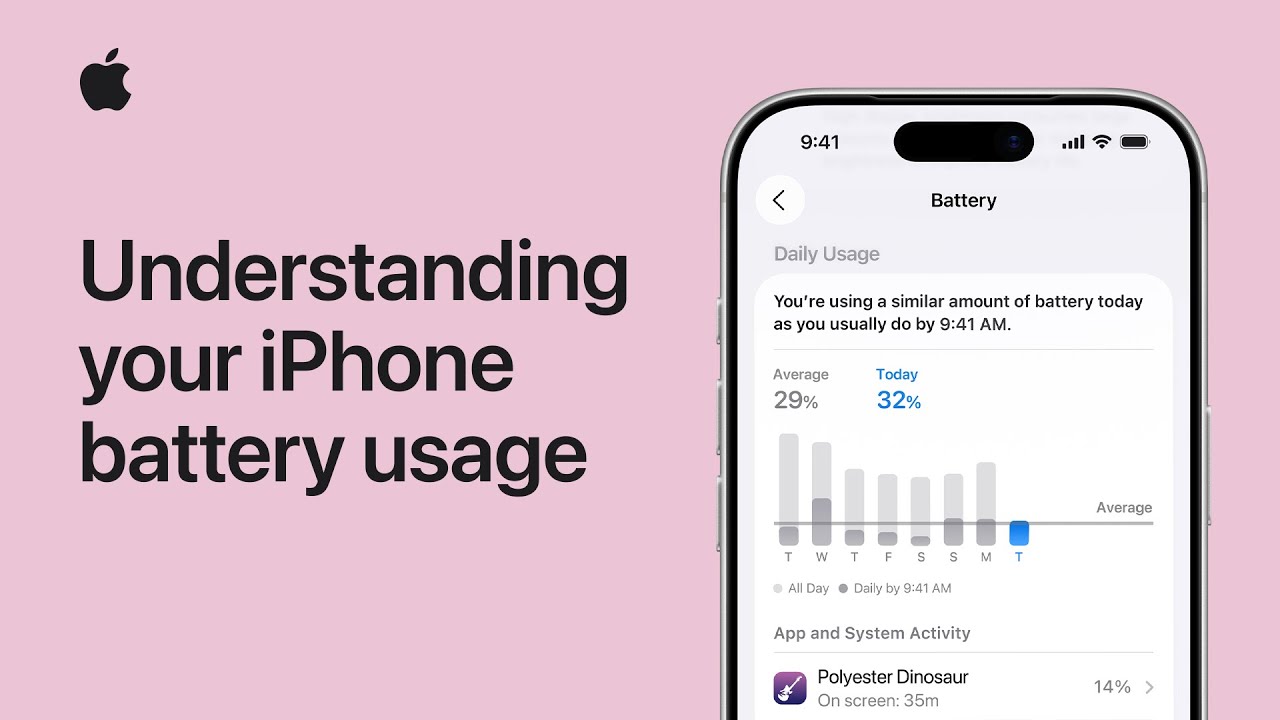
To understand my iPhone battery usage, I start by checking Settings and waiting a couple of days after updates, since background processes can affect battery life.

I look for any alerts in the Battery Insights section, then try to use Wi-Fi instead of cellular to save power.

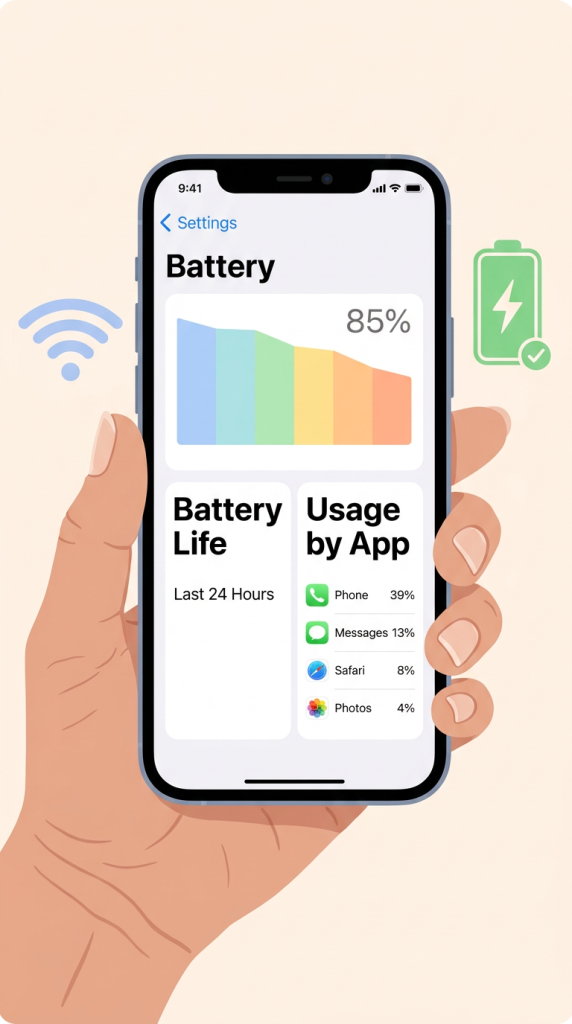
Next, I go to Settings, tap Battery, and select “View All Battery Usage” to review daily activity, screen time, and charge levels.

I scroll down to see which apps use the most battery and tap each one for details.

Finally, I check battery health and enable Adaptive Power or Low Power Mode to extend battery life.

  • Check Battery settings and wait after updates for background processes to finish
  • Use Wi-Fi instead of cellular to reduce battery drain
  • View detailed battery usage, screen time, and charge levels
  • Review battery usage by app to identify high consumption
  • Enable Adaptive Power or Low Power Mode to extend battery life