How to add widgets to your iPad Lock Screen | Apple Support

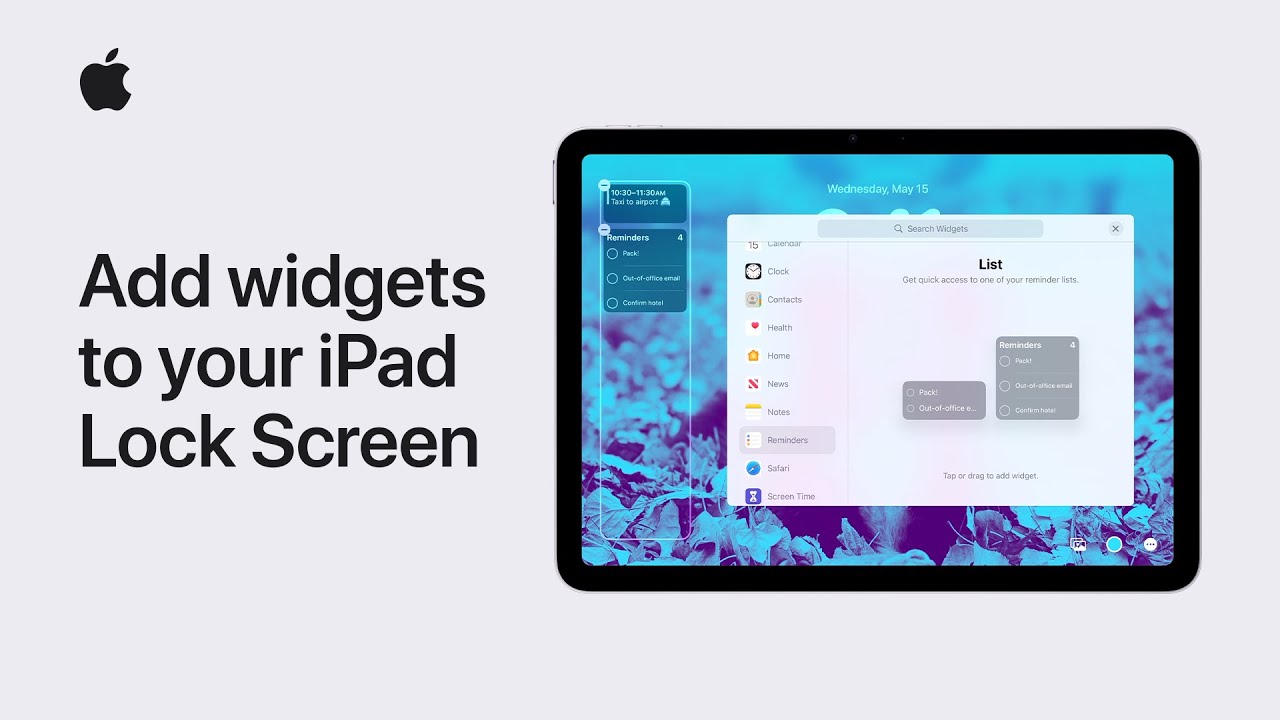
Keep current information at your fingertips with widgets on your iPad lock screen. To add them during lock screen customization, tap “Add Widgets.” You can choose from suggested widgets or select widgets from a specific app. For example, tap to add the calendar widget from the suggestions, then tap to add a reminders list widget. Once done, tap the close button to return to the lock screen you’re customizing. Personalize your lock screen to your preferences and for more tips, subscribe to the Apple support YouTube channel or watch more videos.

Summary:
– Add widgets to your iPad lock screen for quick access to information.
– During lock screen customization, tap “Add Widgets.”
– Choose from suggested widgets or select from specific apps.
– Add desired widgets, such as calendar and reminders, and tap close.
– Customize your lock screen and learn more by subscribing to the Apple support YouTube channel.

How to use AirPlay to stream video or mirror the screen of your iPhone or iPad | Apple Support

With AirPlay, you can share various content from your iPhone or iPad to larger screens like Apple TV, Smart TVs, or Mac computers. First, ensure both devices are on the same Wi-Fi network. To stream content, tap the AirPlay button within compatible apps and select your desired device. Alternatively, for screen mirroring, access Control Center, tap “Screen Mirroring,” and choose the target device. Enter a code if prompted. Streamed content allows multitasking on your iOS device while playing on the target screen, while screen mirroring replicates your device’s screen in real-time. Enjoy a wider view of apps and content on the larger display.

Summary:
– AirPlay enables sharing content from iPhone or iPad to larger screens like Apple TV, Smart TVs, or Macs.
– Ensure both devices are connected to the same Wi-Fi network before initiating AirPlay.
– Streaming allows displaying videos, photos, and music from compatible apps onto another screen, while screen mirroring replicates the device’s screen on a larger display in real-time.
– To stream content, tap the AirPlay button within compatible apps and select the desired device. For screen mirroring, access Control Center and tap “Screen Mirroring,” then choose the target device.
– Enjoy multitasking on the iOS device while content streams on the target screen or view apps and content in real-time on the larger display through screen mirroring.

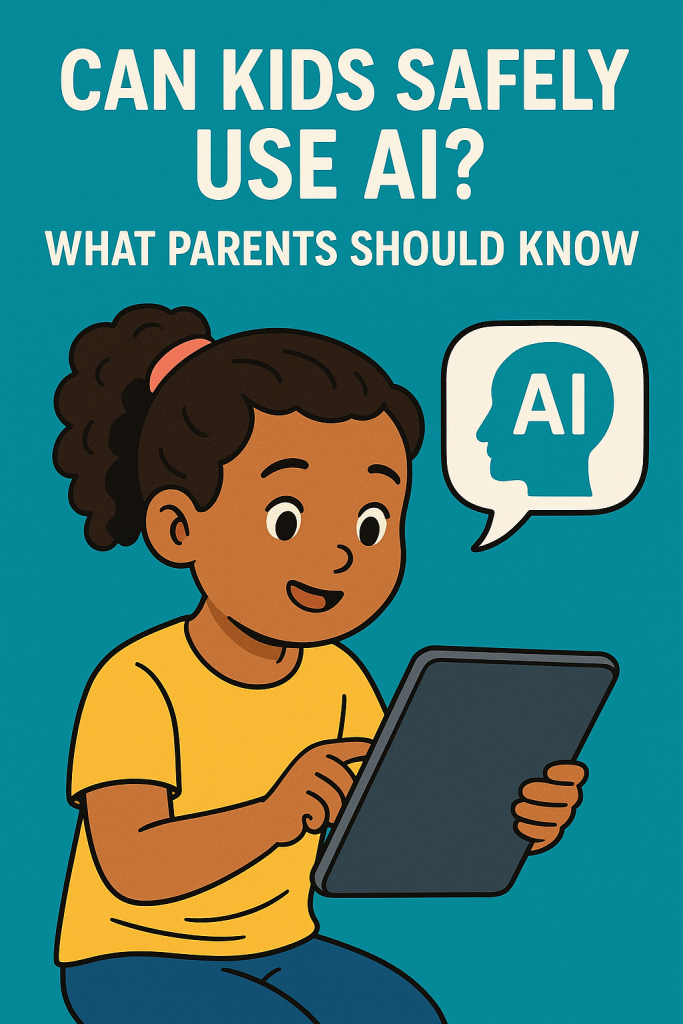
Can Kids Safely Use AI? What Parents Should Know

Artificial intelligence, or AI, is showing up more and more in the apps, games, and toys that children use every day. It can seem helpful—even magical—but as a parent, you may wonder: Is this safe for my child?

This guide is here to help. We’ll explain what AI is in simple terms, how it can be used in ways that help children learn and play, and what to watch out for. You don’t need to be a tech expert to keep your child safe—we’ll walk you through it all in a friendly, easy-to-understand way.

Table of Contents

Key Takeaways

  • AI is already in many children’s apps, games, and toys
  • Some AI tools are safe and educational, while others may pose privacy or content risks
  • Look for tools designed for kids that have clear safety and privacy protections
  • Parental supervision and open conversations help children use AI responsibly
  • Age-appropriate settings and controls can limit risks and increase safety

What Is AI, and Where Do Kids Encounter It?

AI stands for artificial intelligence. It means a computer or program can “learn” and make decisions based on information. That might sound complex, but you’ve likely seen it in action:

  • A talking doll or robot that answers questions
  • A voice assistant like Alexa or Siri
  • YouTube recommending videos your child might like
  • Learning apps that adjust difficulty based on your child’s answers

These are all examples of AI at work. It’s designed to make things easier or more fun—but not all AI tools are made with children in mind.

The Benefits of AI for Kids

When used carefully, AI can support your child’s development in positive ways. Here are some examples:

  • Learning tools: Some reading or math apps use AI to personalize lessons, helping kids learn at their own pace.
  • Creative play: AI-powered drawing apps or music tools can spark creativity and imagination.
  • Speech and communication help: Some AI programs assist children with speech delays or language learning.
  • Social skills: Interactive toys can help younger kids practice conversation and emotions.

These tools can make learning more engaging and fun—but it’s important to choose ones that are age-appropriate and come from trusted companies.

What Are the Risks?

Even though AI has benefits, it can also pose risks if not used carefully. Here are a few things to keep in mind:

1. Privacy Concerns

Many AI tools collect data to function—like what your child says, watches, or types. This information might be stored, shared, or used to suggest more content.

What to do:

  • Read the privacy policy of apps and devices
  • Choose tools that say they follow children’s privacy laws, like COPPA in the U.S.
  • Use apps that don’t require personal information

2. Inappropriate Content

AI tools that pull information from the internet—like chatbots or video platforms—can sometimes show or say things not meant for children.

What to do:

  • Use platforms with built-in kid filters (like YouTube Kids)
  • Turn on “Safe Mode” or “Parental Controls” when available
  • Test the app yourself before letting your child use it

3. Too Much Screen Time

Some AI apps and games are so engaging that children may spend too long on them, which can affect sleep, schoolwork, or social time.

What to do:

  • Set clear limits on screen time
  • Encourage breaks and offline play
  • Use timers or parental controls built into devices

4. Lack of Human Interaction

Relying too much on AI toys or apps may limit face-to-face interactions, which are important for social development.

What to do:

  • Use AI tools together with your child
  • Balance screen time with outdoor play and family activities
  • Talk regularly about what they’re using and learning

Choosing Safe, Child-Friendly AI Tools

Here are some signs that an AI-powered app, game, or toy is designed with children in mind:

  • Clearly marked for a specific age group
  • Simple privacy policy with no unnecessary data collection
  • No ads or in-app purchases
  • Positive reviews from other parents or educators
  • Comes from a trusted educational company

Examples of AI tools made for kids:

  • Osmo (interactive learning games with AI)
  • Khan Academy Kids (adaptive learning activities)
  • Sago Mini World (safe play apps for younger children)
  • Quillionz or ChatGPT Kids modes (if available, with guardrails for learning and fun)

Final Thoughts

AI is part of our world—and it’s part of your child’s world, too. While there are risks to be aware of, there are also many exciting tools that can help kids learn, grow, and have fun.

By staying involved, setting boundaries, and choosing tools made for kids, you can help your child use AI safely and confidently.

Looking for more help picking the right tools? Explore our other guides on screen time, kid-friendly apps, and digital safety.

Categories AI

How to Use Airdrop on iPhone or iPad

Airdrop simplifies file sharing across Apple devices, including iPhones, iPads, and Macs, using Bluetooth. First, activate Wi-Fi and Bluetooth in the Control Center. Adjust Airdrop settings to limit recipients, choosing between “Contacts Only” or “Everyone.” Then, select the file to share and tap the share icon. Choose Airdrop and select the recipient device. Ensure both devices are within Bluetooth range. Accept the transfer on the receiving device. Airdrop accommodates various file types, such as notes, URLs, and images. It’s a convenient method for on-the-go sharing without requiring Wi-Fi.

Summary:
– Airdrop facilitates easy file sharing between Apple devices like iPhones, iPads, and Macs via Bluetooth, without requiring Wi-Fi.
– Activate Wi-Fi and Bluetooth in the Control Center of both sender and receiver devices.
– Customize Airdrop settings to allow sharing with “Contacts Only” or “Everyone,” adjusting as needed.
– Select the file to share, tap the share icon, then choose Airdrop and the recipient device.
– Accept the transfer on the receiving device to complete the sharing process seamlessly.

How to share your Wi-Fi password | Apple Support

To quickly share your Wi-Fi password with a friend from your iPhone, ensure both phones have Wi-Fi and Bluetooth enabled. Open Control Center and disable Personal Hotspot. Make sure you and your friend are saved in each other’s contacts with Apple ID emails. Then, in Settings on your friend’s phone, tap Wi-Fi and select your network. When prompted on your iPhone, tap “Share Password” to confirm. Your friend can now join the network instantly. Share the love by sharing your Wi-Fi! For more tips, subscribe to the Apple Support YouTube channel or explore other videos.

Summary:
– Enable Wi-Fi and Bluetooth on both phones.
– Turn off Personal Hotspot in Control Center.
– Ensure mutual contact details are saved, including Apple ID emails.
– On your friend’s phone, select your Wi-Fi network in Settings.
– Tap “Share Password” on your phone when prompted to allow instant connection.

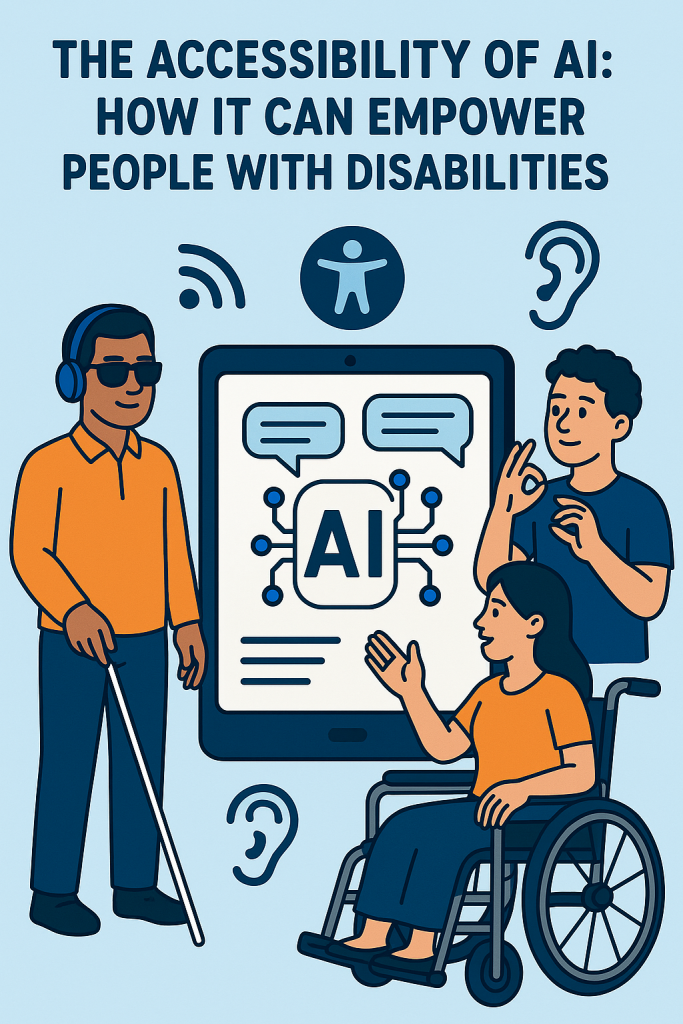
The Accessibility of AI: How It Can Empower People with Disabilities

Technology can feel overwhelming, especially when it changes so quickly. But for people with disabilities, new tools powered by Artificial Intelligence (AI) are opening doors to greater independence and easier daily living.

Whether it’s reading text out loud, describing what’s in a photo, or giving voice commands instead of typing, AI is quietly changing lives in powerful ways. And the best part? You don’t need to be a tech expert to benefit from it.

In this article, we’ll walk you through some of the most helpful AI tools that are making the world more accessible.

Table of Contents

Key Takeaways

  • Voice assistants let you control devices, make calls, or send messages without using your hands.
  • Screen readers powered by AI can read web pages, emails, and books aloud.
  • Image recognition helps describe photos, signs, or objects to people who are blind or have low vision.
  • AI navigation apps guide people through indoor and outdoor spaces with voice directions and alerts.
  • Many of these tools are already built into devices you may already own.

How AI Tools Help People with Disabilities

1. Voice Interfaces: Your Hands-Free Helper

Voice assistants like Apple’s Siri, Google Assistant, or Amazon Alexa can be a huge help for people with limited mobility or dexterity.

With just your voice, you can:

  • Call a family member
  • Send a text
  • Set a reminder or alarm
  • Play music
  • Check the weather
  • Turn lights on or off (with smart home devices)

Example:
If you have arthritis or trouble using a smartphone screen, just saying, “Hey Siri, text my daughter,” lets you stay in touch without needing to type.

2. Screen Readers: Hearing What’s on the Screen

Screen readers are tools that speak aloud the text that appears on a computer or smartphone screen. Modern screen readers use AI to read content more smoothly and accurately.

Popular screen readers include:

  • VoiceOver (Apple devices)
  • TalkBack (Android)
  • JAWS (Windows computers)
  • NVDA (a free screen reader for Windows)

These tools help people who are blind or have low vision:

  • Use apps
  • Browse the internet
  • Read emails
  • Fill out forms

Example:
You receive an email about an appointment. A screen reader can read it to you, tell you the time and date, and even help you add it to your calendar.

3. Image Recognition: Understanding Visual Information

For those with vision challenges, AI-powered apps can “see” for you. By using your phone’s camera, these tools can describe what’s in front of you.

Some helpful apps include:

  • Seeing AI by Microsoft
  • Be My Eyes (connects users with volunteers or AI for visual support)
  • Lookout by Google

These tools can describe:

  • Text on signs or menus
  • Faces and expressions
  • Currency
  • Household objects

Example:
You’re at the grocery store and can’t read a food label. Using Seeing AI, you point your phone at the item and the app tells you what it is and reads the label aloud.

4. AI Navigation Tools: Moving Around with Confidence

Getting around can be difficult if you have a visual, cognitive, or physical disability. AI-powered navigation apps are designed to help.

Examples include:

  • Soundscape (provides 3D audio cues)
  • Aira (connects users with human guides via phone camera)
  • Google Maps’ Accessible Places (shows wheelchair-accessible entrances)

These tools help with:

  • Turn-by-turn voice directions
  • Descriptions of nearby landmarks
  • Notifying you when you’ve arrived at a destination

Example:
You’re walking to a doctor’s office in a busy downtown area. An app like Soundscape can alert you when you pass major landmarks or help you locate the correct building entrance.

5. Everyday Devices Are Smarter Than You Think

The good news is many AI accessibility tools are already built into smartphones, tablets, and smart speakers. You may not need to buy anything new.

For example:

These built-in tools make it easier to stay connected, get things done, and enjoy entertainment.

Final Thoughts

AI might sound like something futuristic, but it’s already making a big difference in the lives of people with disabilities today. Whether it’s reading text out loud, recognizing faces, or guiding someone safely through a crowd, these tools are designed to help people live more independently and with greater ease.

You don’t need to be tech-savvy to start using them. Many of the most helpful features are just a voice command or app download away.

If you’re curious, try exploring what’s already on your device—or ask a friend or family member to help you get started. You might be surprised at how much easier daily life can become.

Categories AI

How to set up and use your AirTag | Apple Support

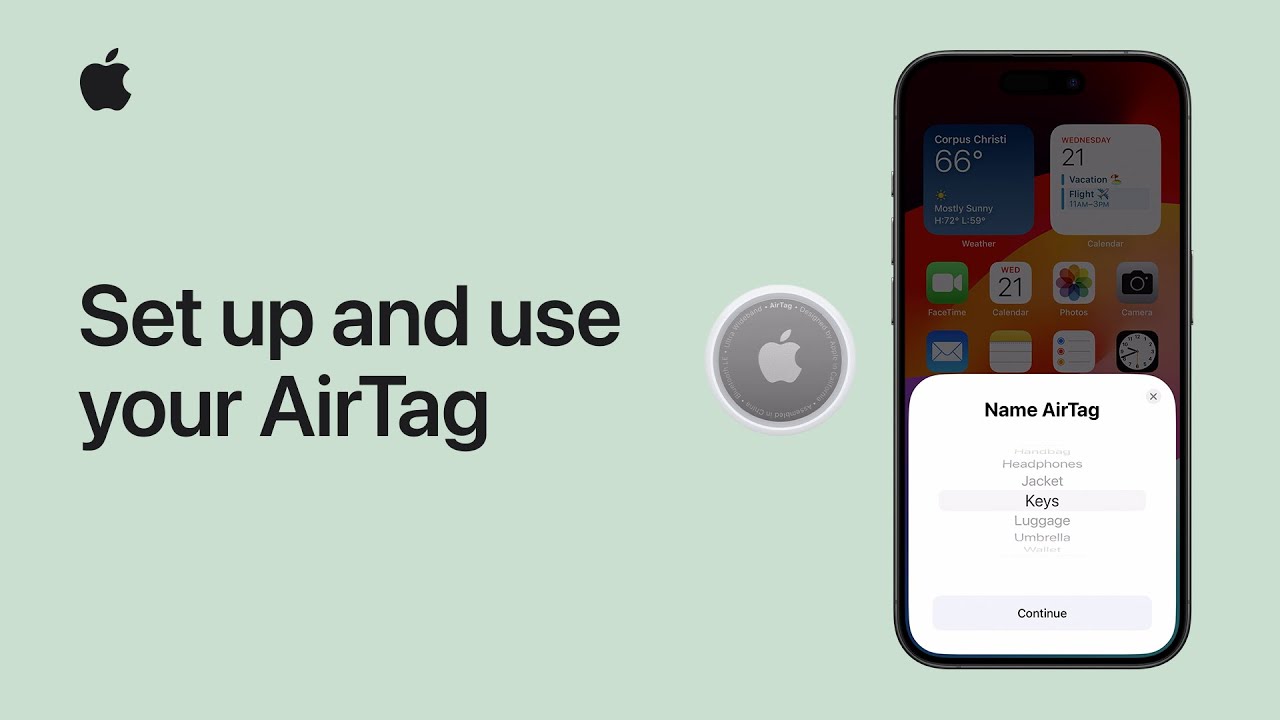
To start using AirTag, ensure iCloud Keychain and two-factor authentication are enabled for your Apple ID, along with Find My location services and Bluetooth on your device. Remove the protective film and plastic tab from the AirTag, then bring it close to your iPhone to start setup. Follow on-screen instructions to complete setup. If an item with the AirTag goes missing, use the Find My app to track it down. Tap your item in the app to see its last known location and options like playing a sound. Use Find Nearby or directions in Maps for precise tracking. Enable Lost Mode for additional assistance, and tap “Enable” to confirm.

Summary:
– Ensure iCloud Keychain, two-factor authentication, Find My location services, and Bluetooth are enabled.
– Remove protective film and plastic tab from AirTag, then bring it close to iPhone for setup.
– Use the Find My app to track missing items with AirTag, accessing last known location and playing a sound.
– Utilize Find Nearby or Maps directions for precise tracking if item is within Bluetooth range.
– Enable Lost Mode for additional assistance and tap “Enable” to confirm setup.

How Governments Are Regulating AI Around the World

Artificial intelligence, or AI, is popping up everywhere—from online shopping and customer service to healthcare and transportation. But as AI becomes more common, many people are asking: Who’s making sure it’s safe and fair?

The answer lies with governments. Around the world, lawmakers are stepping in to create rules that guide how AI is built and used. These rules aim to protect people’s privacy, prevent misuse, and make sure AI benefits everyone—not just big tech companies.

In this easy-to-follow guide, we’ll look at how different countries are handling AI regulation. Whether you’re just curious or trying to understand what this means for your daily life, we’ll walk you through it in a way that’s simple and clear.

Table of Contents

Key Takeaways

  • AI is growing quickly, and countries are rushing to set guidelines.
  • Europe leads with the strongest rules, focusing on safety, transparency, and human rights.
  • The U.S. takes a flexible approach, relying more on industry guidance than strict laws.
  • China uses AI to support national goals, with heavy government oversight.
  • Many other countries are developing their own strategies, often inspired by global trends.
  • International cooperation is starting, but full global rules don’t exist yet.

How Countries Are Approaching AI Regulation

Let’s break it down country by country.

European Union (EU): Leading the Way with the AI Act

The EU is often seen as the strictest when it comes to regulating technology. In 2024, it passed the AI Act, the world’s first major law focused only on AI.

Key Features:

  • AI systems are ranked by risk: low, limited, high, and banned.
  • High-risk AI (like facial recognition in public) must meet strict rules.
  • Transparency is required—people should know when they’re interacting with AI.
  • The focus is on protecting human rights, fairness, and safety.

This approach aims to make sure AI doesn’t harm people or their freedoms. It also encourages companies to build trustworthy technology.

United States: Industry-Led, Flexible Policies

The U.S. has not passed a nationwide AI law yet. Instead, it follows a lighter, more flexible path. Agencies like the Federal Trade Commission (FTC) and the National Institute of Standards and Technology (NIST) are offering guidance, not strict rules.

Key Features:

  • Guidelines encourage companies to be ethical and transparent.
  • AI regulation is often handled by individual states or sectors (like healthcare or finance).
  • President Biden signed an Executive Order in 2023 calling for safe and secure AI development.

The U.S. approach aims to avoid slowing down innovation but may fall short in protecting the public without stronger rules.

China: Strong Government Control and Strategy

China uses AI in many areas, including security, manufacturing, and online services. The government sees AI as key to national growth, so it takes a highly controlled approach.

Key Features:

  • Strict rules govern AI-generated content, like deepfakes or chatbots.
  • Companies must register some AI systems with the government.
  • AI is used for surveillance and social scoring in some areas.

China’s model focuses on control and national benefit. It raises concerns about privacy and freedom but reflects a very different approach to managing technology.

Canada, Japan, and Other Nations: Finding a Middle Ground

Many other countries are developing their own AI strategies:

Canada

  • Created the Directive on Automated Decision-Making for government use of AI.
  • Focuses on accountability and transparency in public services.

Japan

  • Supports innovation while encouraging ethical use.
  • Works closely with businesses to create practical guidelines.

United Kingdom

  • Plans to regulate AI based on how it’s used rather than one-size-fits-all laws.
  • Encourages flexible rules that match different sectors.

These countries often draw inspiration from both U.S. flexibility and EU protections, aiming for a balanced approach.

Global Cooperation: A Work in Progress

Because AI is used across borders, many leaders believe we need global rules. So far, cooperation is still in the early stages.

Efforts Include:

  • The G7 AI Code of Conduct, which encourages responsible AI use.
  • The OECD AI Principles, which many countries have agreed to follow.
  • The United Nations is discussing ways to shape international AI guidelines.

These aren’t laws yet—but they show that countries are trying to work together on shared values like safety, fairness, and human dignity.

Final Thoughts

AI is a powerful tool, and governments around the world are racing to keep up with it. Whether they’re creating strict rules like the EU, flexible policies like the U.S., or national strategies like China, one thing is clear: AI is too important to leave unregulated.

For everyday people, these regulations can help protect privacy, reduce harm, and ensure AI is used for good. As policies continue to develop, staying informed can help you understand how these decisions may affect your rights, your job, or your community.

Want to learn more about how AI is shaping daily life? Check out our guides on AI in healthcare, education, and beyond.

Categories AI

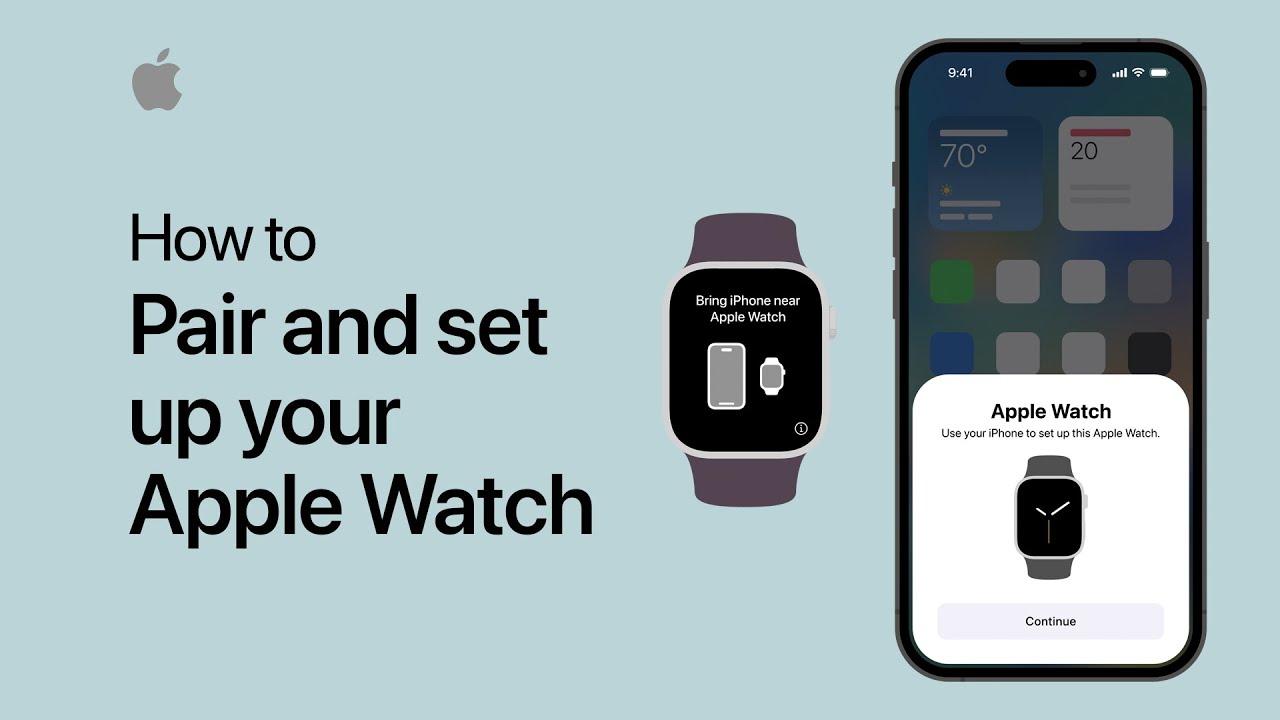
How to pair and set up your Apple Watch | Apple Support

To pair your new Apple Watch with your iPhone, ensure your iPhone has the latest iOS version, is connected to Wi-Fi or cellular, and Bluetooth is enabled. Put on your Apple Watch, turn it on by holding the side button, and place it near your iPhone. Tap “Continue” on your iPhone, select “Setup for Myself” or a family member, and position the watch in the on-screen frame using the iPhone’s camera or pair manually if needed. Follow on-screen instructions to choose settings, wrist preference, and accept terms. Wait for the pairing confirmation, then set up as new or restore from backup. Follow prompts until syncing completes, indicated by a message on your iPhone and the appearance of the watch face on your Apple Watch.

Summary:
– Ensure iPhone is updated, connected to Wi-Fi/Cellular, and Bluetooth is on.
– Turn on Apple Watch by holding the side button, then position it near the iPhone.
– Tap “Continue” on iPhone, choose setup options, and pair the devices.
– Follow on-screen instructions to set preferences, accept terms, and complete setup.
– Wait for sync confirmation, indicated by message on iPhone and watch face appearance on Apple Watch.

How to find your lost AirPods | Apple Support

If your AirPods are missing, use Find My: Open Find My, tap your AirPods, select the item you’re looking for, and use the “Find” or “Directions” button to locate them. Move your iPhone around to track their proximity. For Second Gen AirPods Pro, use Precision Finding. Activate “Lost Mode” to get notifications about their location and prevent unauthorized use. To deactivate, swipe up and tap “Remove This Device.” That’s how Find My helps find your AirPods. Subscribe to Apple Support for more.

Summary:
– Use Find My to locate missing AirPods: Open Find My app, tap on your AirPods, and select the missing item.
– For AirPods out of Bluetooth range, tap “Directions” to see their last known location on Maps.
– For nearby AirPods, tap “Find” to make your iPhone guide you to their location.
– Utilize Precision Finding for Second Gen AirPods Pro to pinpoint the case’s location accurately.
– Activate “Lost Mode” for notifications on their whereabouts and prevent unauthorized use; remove them from Find My once found.