
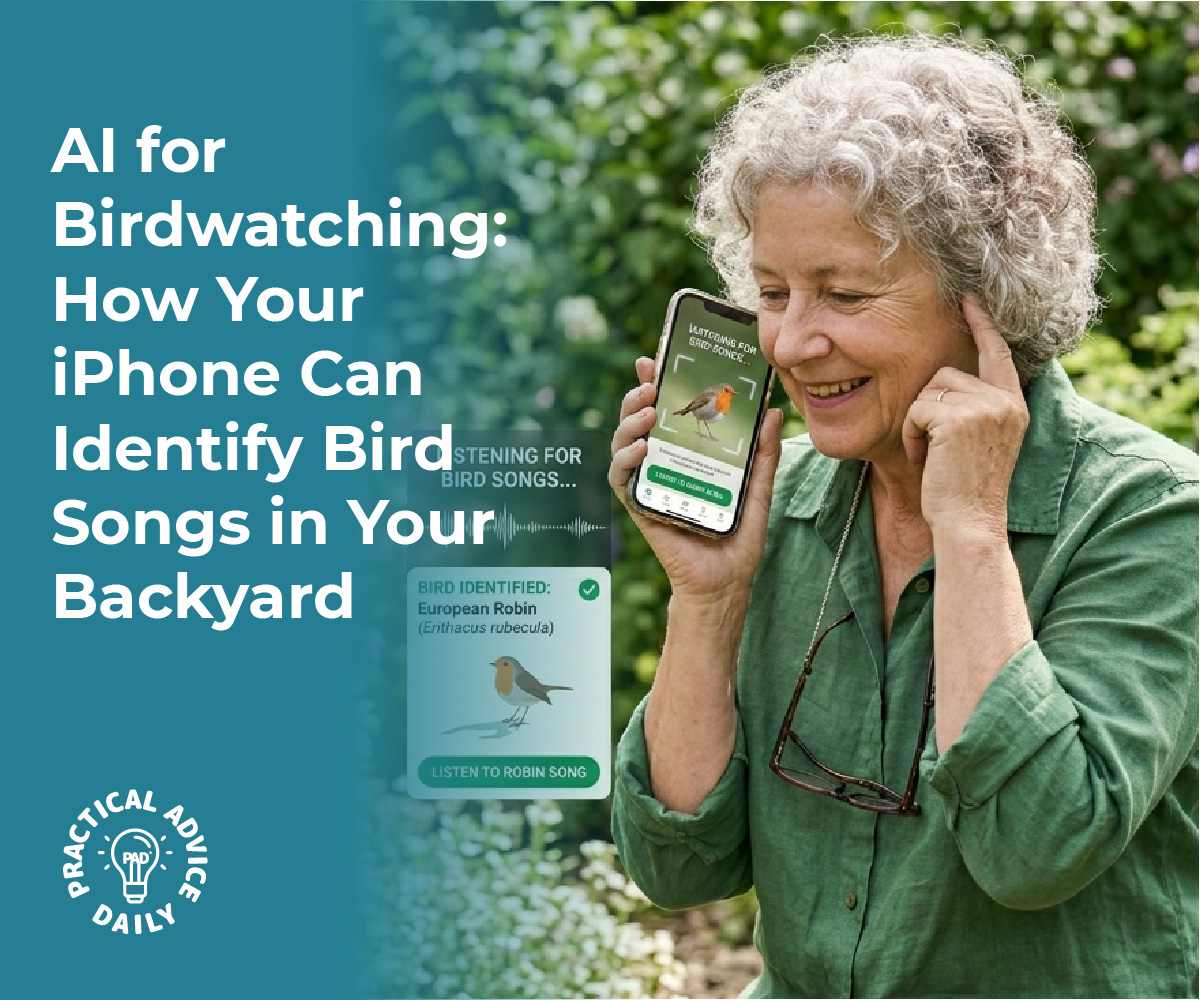
In recent years, birdwatching has gained a modern twist with the advent of AI-powered apps like Merlin Bird ID. These apps listen to bird calls and provide instant identification, adding a new layer of tech engagement to this popular pastime, especially for seniors. Merlin Bird ID stands out as a remarkable tool, transforming birdwatching into an interactive experience by accurately recognizing thousands of bird species globally.

AI birdwatching apps not only enhance the joy of observing birds but also empower users to participate in citizen science projects. Through these applications, birdwatchers contribute valuable data to global biodiversity databases, aiding conservation efforts. This blend of technology and nature fosters a deeper connection with the environment, while also providing educational benefits.
These tools leverage sophisticated AI technologies, such as machine learning and bioacoustics, to differentiate and accurately identify bird songs and calls. With growing user engagement, these apps continuously improve, offering even more precise identifications over time. The result is a rich, immersive experience that invites users to explore the natural world with greater depth and understanding.
Table of Contents
Key Takeaways
- AI apps enhance birdwatching with real-time species identification.
- They support conservation efforts and engage users in citizen science.
- Advanced technologies drive accurate and enriching user experiences.
How AI Birdwatching Apps Bring Joy to Senior Hobbies

AI birdwatching apps, such as Merlin Bird ID, provide an innovative way to connect with nature. By identifying bird calls and species, these tools make this hobby more accessible and enjoyable for seniors, promoting engagement and wellbeing.
A New Layer of Engagement With Merlin Bird ID
Merlin Bird ID introduces an interactive element to birdwatching by using AI to identify birds through their songs and sightings. This technology allows users to capture bird sounds and receive immediate feedback on the species. Seniors who may not have the sharpest eyesight or field skills can still actively participate in birdwatching. This real-time bird identification makes the experience exciting and gratifying, as users can instantly confirm their observations. The app’s ability to distinguish between various bird species adds a level of detail that deepens the user’s connection to their surroundings. Moreover, it supports lifelong learning as users familiarize themselves with new bird species and their unique sounds.
Making Birdwatching More Accessible for All Ages
Birdwatching apps like Merlin Bird ID democratize the hobby by making it accessible to people of various ages and abilities. Traditionally, birdwatching required a significant amount of expertise and patience, but AI tools simplify the identification process. By just recording bird songs or capturing photos, users receive accurate information, eliminating barriers such as physical mobility challenges or gaps in ornithological knowledge. Seniors, who may face limitations in hearing or vision, find these apps particularly beneficial. They no longer need to carry bulky field guides or rely solely on their senses, making outdoor excursions more enjoyable and rewarding. Additionally, the user-friendly design of these apps ensures that even those not well-versed in modern technology can comfortably use them.
Benefits for Mindfulness and Wellbeing
Engaging in birdwatching with the help of AI apps can significantly enhance mental wellbeing and mindfulness. Being out in nature, with a focused activity like identifying birds, helps reduce stress and promote relaxation. For seniors, this mindful attention to the natural world can offer numerous cognitive benefits. It encourages them to stay active, both physically and mentally, which can improve mood and overall health. Birdwatching can also serve as a social avenue, connecting individuals with like-minded peers through shared interests and online communities. By enhancing these experiences, apps like Merlin Bird ID contribute to a sense of purpose and fulfillment in the lives of seniors, fostering an ongoing appreciation for the natural world.
Core Technologies Powering Bird Song Identification
Technologies such as sound recognition and machine learning instruments are key in identifying bird songs, transforming the way bird enthusiasts interact with nature. Meanwhile, advancements in computer vision and the creation of extensive bird databases support these features by providing visual data and essential references.
Sound Recognition and Machine Learning
Sound recognition systems use algorithms to process bird calls and sounds. By analyzing sound waves and patterns, these systems can suggest the identity of a bird based on its vocalizations. Machine learning enhances this process by allowing the application to learn and improve its accuracy over time. The app uses various samples of bird sounds to train models, helping them identify even the most subtle nuances in bird songs, including those of multiple species vocalizing simultaneously. This is a critical aspect as it ensures reliability, even in noisy environments. The integration of artificial intelligence through machine learning enables these apps to offer real-time identification, enriching the user experience immensely.
Advancements in Computer Vision
While primarily focused on sound, computer vision also plays a significant role by leveraging image recognition for bird identification. Algorithms detect patterns, colors, and shapes in photographs, comparing them to extensive image libraries stored within the app. These advancements allow users to capture images of birds and receive instant analysis and identification. Such technologies are particularly useful in situations where audio identification might be challenging, such as when birds are silent or far away. The combination of visual and audio data triangulates identification, making the process more robust and accessible for users at all expertise levels.
Creating and Maintaining Bird Databases
Comprehensive databases are the backbone of bird identification tools. These databases compile a vast collection of bird sounds, photos, and metadata from numerous sources such as field recordings and contributions from amateurs and professionals. Regular updates ensure that the database remains current, reflecting the latest findings in ornithology. Digital storage and cloud technologies help manage and maintain these large datasets, providing seamless accessibility for users. The data also helps enhance machine learning models, promoting continuous improvement in accuracy and coverage. By maintaining such rich repositories of information, these apps not only facilitate bird identification but also contribute to broader conservation and research efforts.
Comparing the Best AI-Powered Bird Identification Apps
AI-powered bird identification apps revolutionize birdwatching by allowing users to identify birds through sound analysis and photo recognition. This section focuses on several top-rated apps that utilize AI, highlighting their unique features and advantages in bird identification.
Merlin Bird ID: The Cornell Lab Advantage
Merlin Bird ID, developed by the Cornell Lab of Ornithology, stands out for its comprehensive approach to bird identification. It offers features that cater to both novice and experienced birders. Users can identify birds by photo or sound recordings, leveraging a vast dataset trained on millions of entries. The app is available for free on both iOS and Android devices, making it easily accessible. Its AI-powered system provides highly accurate identification and allows users to explore an extensive bird call library. Expertly designed, it also includes range maps and supports offline use, enhancing usability during outdoor excursions. The app’s connection to the renowned Cornell Lab provides users with reliable, research-backed data.
BirdNET and Its Unique Features
BirdNET, a collaborative creation of the K. Lisa Yang Center for Conservation Bioacoustics at the Cornell Lab of Ornithology and Chemnitz University of Technology, emphasizes audio identification. It is renowned for its proficiency in recognizing bird calls recorded by users. With nearly 3,000 species in its library, BirdNET excels at analyzing songs and calls, offering near-instant results. The tool is effective even in challenging environments, evaluating recordings with impressive accuracy, thus aiding both expert and amateur birders. By allowing users to submit recordings for future reference, the app fosters an interactive identification experience. Designed for iOS and Android, BirdNET stands out as a dynamic research platform that integrates robust AI technology.
Other Innovative Apps: Song Sleuth, ChirpOMatic, and More
Beyond Merlin and BirdNET, several other apps bring unique features to AI-driven bird identification. Song Sleuth is designed for users in North America and excels in identifying local bird songs using AI. Its user-friendly interface complements its powerful recognition capabilities. ChirpOMatic, available in select regions, offers a minimalist approach, focusing purely on sound identification. It includes a “bird-safe” mode to ensure minimal disturbance during nesting. Additionally, apps like Chirp! Bird Songs & Calls USA offer curated bird call libraries, adding depth to the identification process. These apps provide diverse tools for birders looking to explore their local habitats with enhanced capabilities.
Photo Identification Versus Sound ID
The debate between photo and sound identification is central to the choice of bird identification apps. Photo identification, as exemplified by apps like Merlin Bird ID and iNaturalist, is beneficial for users who prefer visual confirmation and can capture clear images. This method is particularly helpful for distinguishing birds based on plumage details. In contrast, sound identification apps like BirdNET and ChirpOMatic excel in dense vegetation or low-light conditions where photos are challenging. These apps utilize AI to decode complex bird songs, offering a complementary perspective. Both methods have their strengths, and the choice often depends on the user’s environment and personal preference in birdwatching activities.
Community, Conservation, and Data Privacy in the Digital Age
Technology has transformed birdwatching by offering platforms that connect communities, enhance conservation efforts, and ensure data privacy. Birding apps bridge nature enthusiasts and researchers, leveraging community contributions to gather data, enhancing knowledge about bird behaviors and conservation needs.
Citizen Science Opportunities With Apps
Apps like Merlin Bird ID and eBird provide numerous opportunities for citizen scientists to contribute meaningful data to bird conservation efforts. These platforms enable users to submit observations, which are then used to enrich a global understanding of bird populations and behaviors. By documenting bird sightings, users help build comprehensive species databases that are instrumental in tracking trends and changes over time. Such initiatives empower birdwatchers of all skill levels to contribute to science, fostering a sense of community and shared purpose. This collective data collection supports both local and international conservation strategies by expanding the reach and depth of data available to researchers and policymakers.
Bird Sightings, Migration Patterns, and Hotspots
The data collected through these apps offers invaluable insights into bird sightings, migration patterns, and birding hotspots. By mapping sightings, users and researchers can identify key habitats and regions that serve as critical migratory paths. This geographical information aids in pinpointing areas under potential threat and can guide conservation priorities and resource allocation. Regular updates and observations from citizen scientists enable the creation of dynamic maps that reflect real-time changes. This makes it easier for conservationists to respond to environmental changes and implement protective measures that are informed by empirical data, ensuring timely conservation actions.
Conservation Research and Impact
The impact of birdwatching apps extends to conservation research, providing researchers with substantial volumes of data essential for studying avian ecology and behaviors. The ongoing data flow helps scientists to identify trends and anomalies in bird populations, such as declines in specific species or unusual migration patterns. This data helps shape conservation policies and supports initiatives aimed at preserving biodiversity. By aligning with conservation organizations, these apps facilitate cooperative efforts that aim to mitigate human impact on natural habitats. The insights generated help in developing targeted conservation strategies that address specific regional and species-specific challenges.
Ensuring Data Security and Privacy
Maintaining the privacy and security of user data is a significant concern in the digital age. Birdwatching apps recognize the importance of safeguarding personal information while enabling community science. Adherence to robust privacy policies ensures that data on bird sightings and user contributions is protected from unauthorized access or misuse. These policies typically involve anonymizing sensitive data and securing databases against breaches. Users are often granted control over their data sharing preferences, balancing the benefits of community contributions with individual privacy concerns. Ensuring the integrity and confidentiality of data not only protects users but also builds trust, encouraging wider participation in citizen science endeavors.
Final Thoughts
AI-powered birdwatching apps beautifully blend the calm of nature with the convenience of modern technology. What once required years of experience and sharp observation can now be enjoyed by anyone with a smartphone, making birdwatching more accessible, engaging, and rewarding—especially for seniors. With just a simple tap or recording, you can uncover the names and sounds of birds around you, turning every walk into a small adventure.
Beyond personal enjoyment, these tools also give your hobby a meaningful purpose. Each bird you identify can contribute to larger conservation efforts, helping scientists better understand and protect wildlife. As you continue exploring, you may find that birdwatching becomes not only a relaxing pastime but also a way to stay curious, connected, and actively involved in the natural world.