
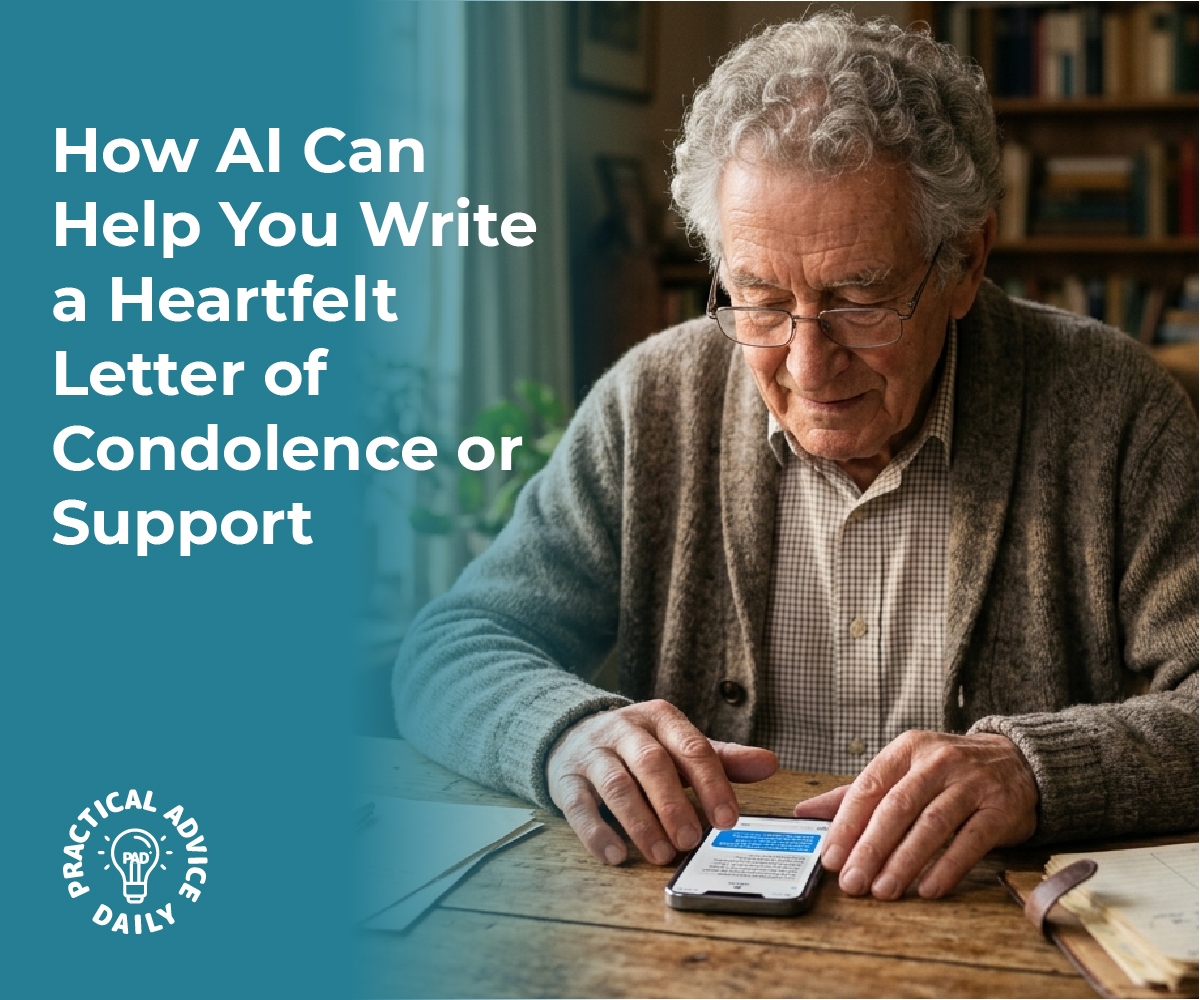
When someone faces loss, illness, or hardship, many people want to offer comfort but struggle to find words that feel genuine and supportive. The fear of saying something unhelpful or insensitive can lead to silence, which often leaves those in distress feeling isolated. This gap between intention and expression creates unnecessary distance during moments when connection matters most.

AI-powered writing tools now help people compose thoughtful, respectful messages by suggesting language that acknowledges pain without minimizing it, offering support without imposing solutions, and maintaining appropriate boundaries. These tools analyze the context of difficult situations and provide frameworks that reduce the anxiety of crafting the first message. They serve as a starting point for authentic communication rather than a replacement for genuine human care.
The challenge isn’t a lack of caring but uncertainty about how to express it effectively. AI assistance can bridge this gap by offering structure and guidance while preserving the personal touch that makes support meaningful. When used thoughtfully, these tools help people move past hesitation and reach out to those who need to know someone cares.
Table of Contents
Key Takeaways
- AI tools help overcome the paralysis of finding supportive words during difficult moments by providing structured starting points for communication.
- Effective supportive messages acknowledge emotions without minimizing them and offer presence without imposing unwanted solutions.
- Technology assists with crafting respectful language but works best when combined with genuine human intention and follow-through.
Key Principles of Offering Support Through Words

Supportive communication rests on three interconnected foundations: the specific language chosen, the empathetic connection established, and the authenticity conveyed. These elements work together to create meaningful support during challenging moments.
Understanding the Power of Comforting Words
Comforting words carry measurable impact during difficult times. Research shows that the right phrases can reduce stress responses and help individuals process emotional challenges more effectively.
Effective supportive phrases share common characteristics:
- They acknowledge the difficulty without minimizing it
- They offer presence rather than immediate solutions
- They respect the person’s autonomy and experience
Phrases like “I’m here for you” or “How can I best support you through this?” demonstrate availability while honoring the individual’s capacity to direct their own needs. The specific wording matters because certain phrases can inadvertently dismiss or invalidate experiences.
Timing significantly influences how supportive language lands. Immediate responses require different approaches than support offered after someone has processed initial reactions. Words that feel helpful in the moment may differ from those that provide comfort days or weeks later.
The Role of Empathy and Emotional Support
Empathy transforms words from simple acknowledgment into genuine connection. It involves recognizing another person’s emotional state and responding in ways that demonstrate understanding without claiming to fully share their experience.
Empathetic communication requires active listening before speaking. This means absorbing what someone shares without immediately formulating responses or comparisons to personal experiences.
Key empathetic responses include:
- Reflecting back what was heard
- Naming emotions when appropriate
- Asking clarifying questions that show engagement
Emotional support through words differs from advice-giving. While suggestions may help in some contexts, supportive language primarily validates the person’s current state rather than rushing toward resolution. The focus remains on presence and acknowledgment.
Validating Feelings and Being Genuine
To validate feelings means confirming that emotions are understandable and acceptable responses to circumstances. This validation doesn’t require agreement with every perspective, but it recognizes the legitimacy of emotional experiences.
Genuine responses avoid scripted or performative language. People typically detect when words sound rehearsed or disconnected from authentic concern. Being genuine involves speaking from honest intention rather than obligation.
Authenticity shows through specificity. Instead of generic phrases like “everything happens for a reason,” genuine support acknowledges particular circumstances: “This situation is unfair” or “You’re dealing with something really difficult.” These responses feel more honest because they address the actual experience rather than applying broad platitudes.
The combination of validation and genuineness creates trust. When someone feels their emotions are both recognized and met with authentic concern, supportive words achieve their intended purpose.
How AI Tools Assist in Crafting Respectful and Supportive Messages

AI tools analyze input information and suggest language that balances empathy with appropriateness, helping users express concern without overstepping boundaries. These systems can adapt messaging to fit different relationships and situations while maintaining emotional sensitivity.
Personalizing Supportive Messages Using AI
AI personalizes supportive messages by analyzing the relationship context, the recipient’s situation, and the sender’s communication style. Users input basic details about the circumstances, and the AI generates options that reflect genuine concern rather than generic condolences.
These tools consider factors like formality level, cultural considerations, and the severity of the situation. For instance, comforting words for a friend experiencing job loss differ significantly from messages addressing a health crisis. The AI identifies appropriate emotional depth and suggests specific references that demonstrate thoughtfulness.
Advanced systems also learn from user preferences over time. They recognize patterns in how someone typically communicates and mirror that authentic voice while enhancing clarity and compassion. This prevents messages from sounding robotic or impersonal, maintaining the sender’s unique perspective while improving expression.
Ensuring Emotional Relevance and Tone
AI systems evaluate emotional tone by examining word choice, sentence structure, and phrasing patterns that convey empathy. They identify potentially insensitive language and recommend alternatives that demonstrate understanding without minimizing someone’s experience.
The technology distinguishes between offering support and providing unsolicited advice. When supporting someone facing mental health challenges, AI suggests validating statements rather than problem-solving responses. It prioritizes phrases that acknowledge feelings and demonstrate presence.
Key tone adjustments AI makes:
- Removes minimizing phrases like “at least” or “it could be worse”
- Suggests active listening language such as “I hear you” or “that sounds difficult”
- Balances sympathy with respect for the person’s autonomy
- Adjusts formality based on relationship closeness
These refinements help users communicate words of comfort that resonate authentically with recipients.
Addressing Diverse Situations: Friends, Family, and Colleagues
Different relationships require distinct communication approaches. AI tools adapt messages for professional colleagues, close friends, or family members by adjusting intimacy levels and emotional expression.
For workplace situations, AI maintains professional boundaries while conveying genuine concern. Messages to colleagues focus on practical support offers and avoid overly personal language. For family members, the AI suggests warmer, more emotionally direct phrasing that reflects deeper connections.
The technology also handles sensitive timing considerations. It recognizes when brevity serves better than lengthy messages and when detailed acknowledgment matters more. Friends experiencing grief might appreciate specific memories or offers of practical help, while distant acquaintances benefit from simpler expressions of sympathy that respect privacy boundaries.
Benefits and Considerations in Using AI for Emotional Communication
AI tools offer immediate access to supportive language frameworks while raising important questions about human connection, mental health applications, and data protection. These technologies can reduce communication barriers but require careful attention to privacy and maintaining authentic relationships.
Enhancing Accessibility and Reducing Anxiety
AI-powered communication tools provide 24/7 availability for individuals who need help crafting supportive messages during difficult conversations. Research indicates that conversational AI can support emotional recalibration by helping users practice and refine their responses before engaging in sensitive discussions.
These tools particularly benefit people who experience social anxiety or uncertainty about appropriate language in delicate situations. Users can explore different phrasing options without fear of immediate judgment or making mistakes in real-time interactions.
The technology reduces the pressure of finding perfect words instantly. Someone can take time to review AI-generated suggestions, adapt them to their authentic voice, and feel more confident approaching difficult conversations. This preparation often leads to more thoughtful communication rather than avoidance or poorly worded attempts.
AI assistants can also help bridge cultural or generational communication gaps by offering alternative phrasings that maintain respect while conveying care. The immediate feedback loop allows users to understand why certain word choices might be more effective than others in specific contexts.
Balancing AI and Human Connection
Studies demonstrate that emotional support effectiveness depends significantly on perceived supportiveness rather than the source itself. However, the connection between emotional support and perceived supportiveness proves stronger when coming from humans compared to chatbots.
AI should function as a preparation tool rather than a replacement for genuine human interaction. Using AI to draft or refine messages works best when the final communication maintains personal authenticity and reflects the sender’s true empathy.
Recipients generally value knowing they are receiving support from a real person who genuinely cares about their situation. The risk of over-reliance on AI-generated messages lies in creating interactions that feel scripted or impersonal, which can undermine the very support being offered.
Key distinctions to maintain:
- AI assists with structure and word choice
- Human input provides emotional authenticity
- Personal details and genuine concern must come from the sender
- Final messages should reflect individual relationships and context
Ethical Use and Privacy Policy Concerns
Mental health discussions involve highly sensitive personal information that requires robust privacy protections. Users must understand how AI platforms handle, store, and potentially use conversational data before sharing details about difficult situations or vulnerable individuals.
Many AI services collect conversation data to improve their models, which raises concerns about confidentiality in emotionally charged communications. Reading the privacy policy becomes essential before inputting information about personal struggles, relationship challenges, or mental health concerns.
Data breaches or unauthorized access to these communications could expose private struggles or compromise trust in relationships. Users should avoid entering identifying details about others when seeking AI assistance for supportive messages.
The ethical use of AI for emotional communication also requires transparency. Recipients may deserve to know when messages were significantly shaped by AI tools, particularly in close relationships where authenticity forms the foundation of trust. Some situations demand entirely human-generated responses to honor the relationship’s significance and the recipient’s vulnerability.
Final Thoughts
AI can gently help you find the right words when you’re unsure what to say—use it to draft and practice messages, but always add your own personal details and honest intent so your words feel sincere. Keep privacy in mind: avoid sharing identifying details, check the tool’s data policy, and rely on your judgment for sensitive situations that need human care. Treat AI suggestions as a starting point—consider timing, relationship, and follow-up (a call, visit, or practical help) to show you truly care. Used thoughtfully, AI lowers the barrier to reaching out and helps you connect with warmth and respect.