
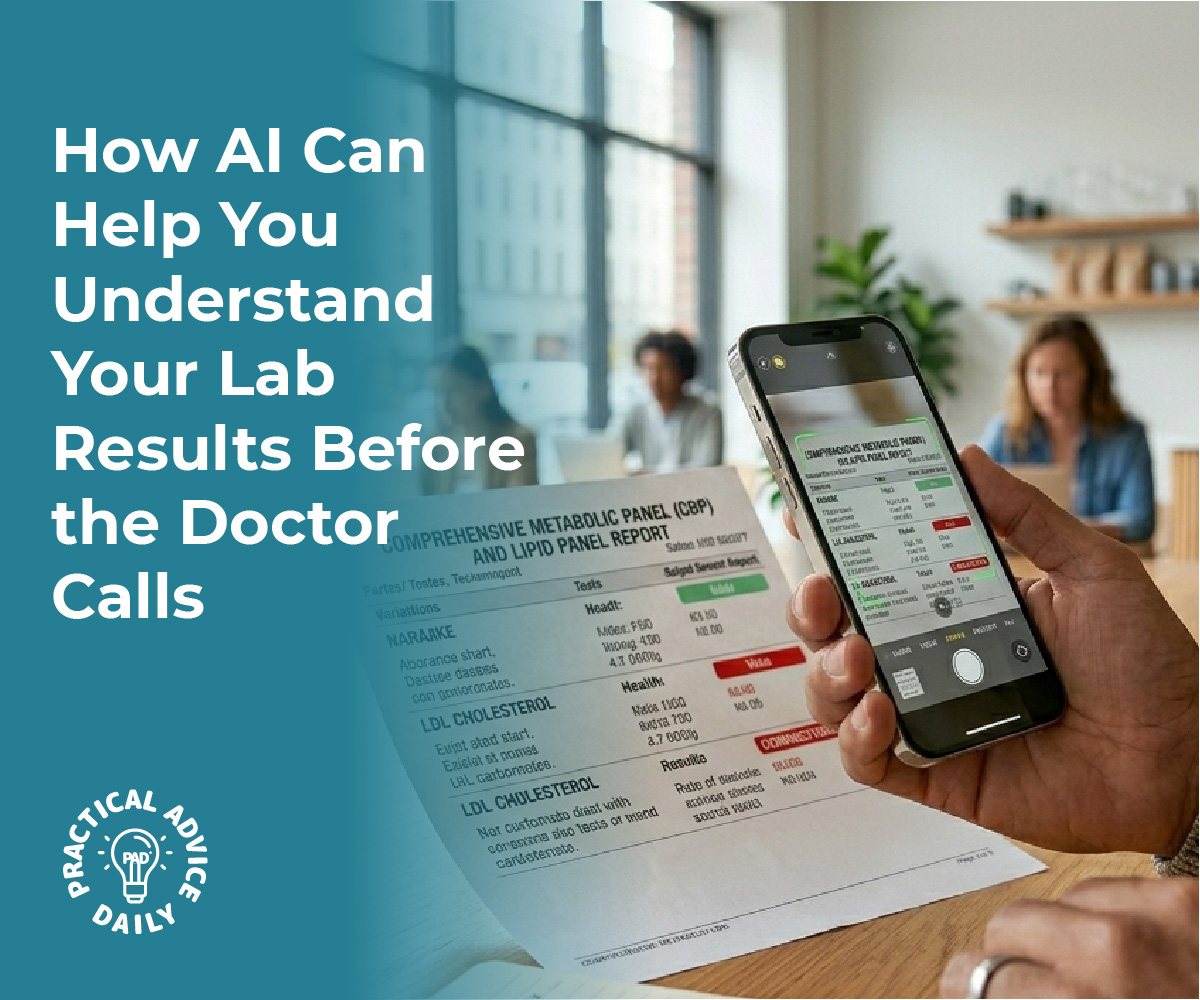
You receive your blood test results and encounter terms like “serum creatinine,” “hemoglobin A1c,” or “lipid panel.” The numbers and medical terminology can feel overwhelming, leaving many patients confused about what their results actually mean for their health. Recent research shows that 88% of U.S. adults struggle with health literacy, making it difficult to understand basic medical information without professional guidance.

AI-powered tools now offer a solution by translating complex medical jargon from blood tests into simple, everyday language, helping patients better understand their lab results while they wait for their doctor’s appointment. These platforms use advanced algorithms trained on clinical guidelines and medical research to break down technical terms into plain English. Patients can upload their lab reports and receive instant explanations of what their CBC, metabolic panel, or thyroid tests indicate.
These AI translators serve as educational resources to help patients prepare questions for their healthcare providers and reduce anxiety about unfamiliar medical terms. However, they are not replacements for professional medical advice. Any concerns about test results, abnormal values, or health conditions require consultation with a qualified healthcare provider who can interpret results within the full context of your medical history and current health status.
Table of Contents
Key Takeaways
- AI translation tools convert complex blood test terminology into understandable language for patients struggling with medical jargon
- These platforms provide educational insights to help patients have more informed conversations with their doctors
- AI interpreters are supplementary resources only and cannot replace professional medical consultation or diagnosis
Clarifying Blood Test Terms With AI

AI-powered tools process medical terminology by matching complex terms with simpler equivalents, identifying abnormal ranges, and providing context for specific biomarkers. These systems reference clinical databases but require human medical judgment for proper diagnosis and treatment decisions.
How AI Converts Medical Jargon to Plain English
AI blood test interpreters use natural language processing to break down technical medical terminology into accessible language. The systems scan uploaded lab reports and identify specific biomarkers like “leukocytes” or “creatinine,” then replace these terms with everyday equivalents such as “white blood cells” or “kidney waste product.”
The conversion process works through pattern recognition trained on thousands of medical documents. When the AI encounters “elevated ALT” in a liver panel, it explains this as “higher than normal levels of an enzyme that might indicate liver stress.” The technology identifies reference ranges and flags values that fall outside normal parameters with clear visual indicators.
Advanced platforms like RosettaMD process multiple data points simultaneously. They cross-reference individual test results with related biomarkers to provide comprehensive explanations. A hemoglobin reading doesn’t appear in isolation—the AI connects it to related values like red blood cell count and hematocrit to paint a complete picture for the patient.
Features of Leading AI Blood Test Interpreters
Most AI analyzers accept multiple file formats including PDF, JPG, and PNG uploads. They process reports in real-time, typically delivering explanations within seconds of submission.
Common features include:
- Visual highlighting of abnormal values with color coding
- Comparison tools showing patient results against normal reference ranges
- Trend analysis tracking changes across multiple test dates
- Multi-test support covering CBC, CMP, thyroid panels, lipid profiles, and 50+ other common tests
- Privacy protections with immediate file deletion after processing
Priority processing options reduce wait times during peak usage. Detailed interpretation modes provide expanded explanations beyond basic definitions, helping patients understand potential health implications. Some platforms support multiple languages, improving health literacy for non-English speakers.
Limits of AI Medical Translation Tools
AI interpreters explain what test results show but cannot diagnose medical conditions. The technology lacks the clinical experience and contextual understanding that physicians bring to patient care. A doctor considers symptoms, medical history, physical examination findings, and multiple test results together—factors AI cannot fully assess.
Reference ranges vary between laboratories and patient demographics. AI tools may use standardized ranges that don’t account for age, sex, pregnancy status, or individual health conditions affecting normal values. Sites like rosettamd.com and similar platforms include disclaimers emphasizing these limitations.
The systems struggle with unusual test configurations or handwritten reports with poor image quality. They cannot answer follow-up questions about treatment options or explain how medications might affect future test results. Patient understanding improves with AI assistance, but these tools serve as educational supplements rather than medical advisors.
Spotlight on RosettaMD and Its Innovations

RosettaMD emerged in June 2025 as a free digital platform specifically designed to convert medical terminology into plain English, addressing the critical issue that 88% of U.S. adults struggle with health literacy. The platform combines medical expertise with artificial intelligence to tackle semantic interoperability challenges while maintaining user privacy and broad accessibility.
Founding Story and Dr. Chris Wixon’s Vision
Dr. Chris Wixon, a Hilton Head surgeon, created RosettaMD after recognizing the persistent communication gap between healthcare providers and patients. His medical practice exposed him to countless instances where patients left appointments confused about their test results and diagnoses.
The platform launched officially on June 21, 2025, with a clear mission to democratize medical information. Dr. Wixon designed the tool to be completely free to use, removing financial barriers that often prevent patients from accessing health literacy resources.
His vision extends beyond simple word-for-word translation. The platform aims to improve overall patient understanding of medical reports, enabling individuals to have more informed conversations with their healthcare providers while maintaining the critical reminder that AI translations complement rather than replace professional medical advice.
Role of Archimedes Medical and Technology Behind the Platform
Archimedes Medical, LLC serves as the parent company behind RosettaMD, providing the organizational infrastructure and technical development for the platform. The company focuses on healthcare communication solutions, with RosettaMD representing its flagship patient-facing tool.
The technology processes complex medical terminology and transforms it into accessible language that patients can understand. The platform specifically addresses semantic interoperability, which refers to the ability of different systems and stakeholders to exchange and interpret medical information accurately.
RosettaMD.com operates as a web-based interface where users can input medical reports, lab results, or clinical documentation. The AI engine then analyzes the content and generates simplified explanations while preserving medical accuracy.
User Privacy and Accessibility Features
RosettaMD operates on a free-to-use model, eliminating cost as a barrier to accessing health literacy tools. Users can access the platform at rosettamd.com without subscription fees or premium tiers.
The platform prioritizes accessibility for diverse populations. It presents information at appropriate reading levels, recognizing that health literacy challenges affect people across education and income levels.
Privacy considerations remain central to the platform’s design, though specific technical implementations reflect the broader need for patients to understand how their medical information is handled when using digital health tools. Users should verify the platform’s current privacy practices directly through the official website before uploading sensitive medical documents.
Semantic Interoperability and the Future of Patient Health Literacy
Semantic interoperability addresses the challenge of translating medical terminology across different healthcare systems and stakeholders, while AI-powered tools are reshaping how patients access and understand their health information. These technologies create pathways for improved patient engagement and decision-making, though they require careful ethical frameworks.
Bridging the Gap Between Doctor and Patient Language
Semantic interoperability enables different healthcare systems, providers, and patients to understand medical information consistently. The challenge extends beyond technical data exchange—it encompasses the fundamental communication barrier between clinical language and patient comprehension.
AI translation tools now convert complex medical terminology from lab results and imaging reports into accessible language. RosettaMD, launched in 2025, provides free translation of medical jargon into plain English through both a digital platform and Chrome extension. Patients can hover over unfamiliar terms in their test results to receive clear definitions without navigating away from their documents.
Research demonstrates that generative AI successfully removes technical language from discharge notes and clinical documentation. The technology identifies medical terms and replaces them with patient-friendly alternatives while preserving clinical accuracy. This capability addresses a persistent healthcare problem where patients receive important health information they cannot properly interpret.
Impact of AI Tools on Patient Empowerment
AI-powered portals transform raw health data into understandable insights that support active patient participation in care decisions. Studies show that LLM-generated responses to patient questions about cancer care contain more educational content than clinician-written responses alone, indicating potential improvements in health literacy.
Patients gain several advantages from AI translation:
- Immediate access to explanations without waiting for provider callbacks
- Reduced anxiety from misinterpreting unfamiliar medical terms
- Better preparation for appointments with informed questions
- Increased transparency in understanding their health conditions
The technology facilitates meaningful communication between patients and care teams by removing language barriers that previously required medical training to overcome. Patients can review their blood test results and comprehend what elevated liver enzymes or abnormal blood counts mean for their health status.
Ethical Considerations and Medical Disclaimers
AI translation tools require explicit boundaries regarding their role in patient care. These systems provide information but cannot replace professional medical judgment or account for individual patient contexts.
Critical limitations include:
- AI may miss nuanced clinical significance that doctors recognize
- Translation accuracy varies depending on medical complexity
- Models sometimes generate inappropriate recommendations
- Automation bias leads users to accept AI output without sufficient scrutiny
Studies reveal that LLM responses to patient questions occasionally include severe errors, particularly in communicating urgency. One-third of cancer treatment responses included inappropriate treatment modalities despite correct general recommendations.
Strong medical disclaimers must accompany all AI health translation tools. These disclaimers should explicitly state that AI-generated explanations serve educational purposes only and cannot substitute for consultation with healthcare providers. Patients need clear guidance on when to seek immediate medical attention rather than relying on AI interpretations.
The technology works best as a supplementary resource that prepares patients for productive conversations with their doctors, not as a replacement for professional medical advice.
Final Thoughts
Receiving a lab report shouldn’t feel like trying to read a foreign language. By using AI as a bridge, you can transform intimidating terms into clear, actionable information that helps you understand your body better. While these tools shouldn’t replace a conversation with your physician, they are incredibly powerful for calming nerves and helping you walk into your next appointment with a list of informed questions.
The future of healthcare is one where patients are active participants, and technology like RosettaMD is making that possible for everyone—not just medical professionals. As long as we remember that AI provides education while doctors provide diagnosis, we can use these tools to take greater control of our health journey.