
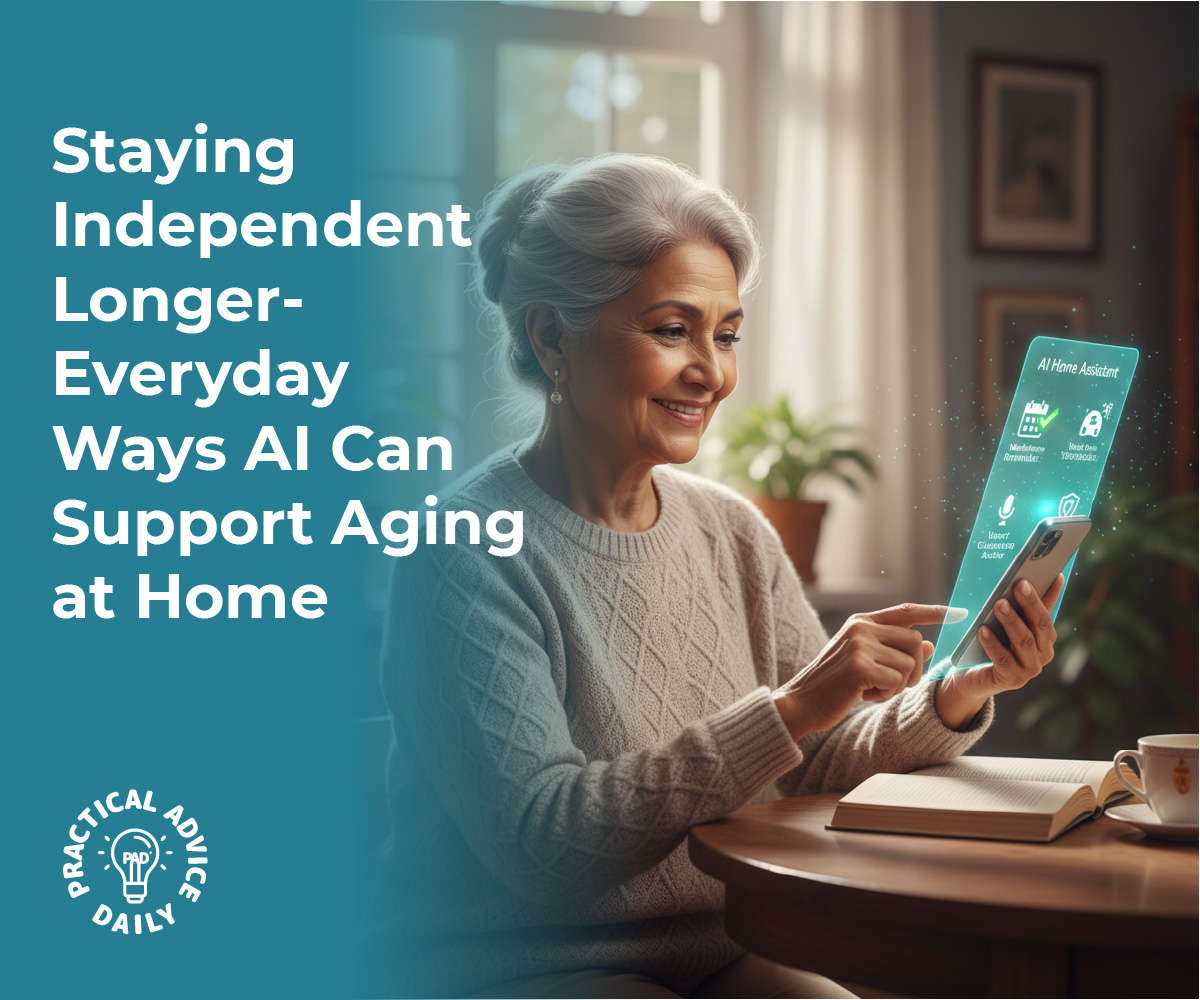
Technology doesn’t have to be complicated to be life-changing. Today, simple tools powered by Artificial Intelligence (AI) are helping people stay in the homes they love for longer. This guide will show you how small additions to your daily routine can provide extra safety, comfort, and peace of mind without needing to be a “tech expert.”
Table of Contents
Key Takeaways
- Voice Control: Use your voice to turn on lights or adjust the temperature without getting up.
- Smart Reminders: Never miss a pill or an appointment with friendly voice alerts.
- Safety First: Automated sensors can detect falls or unusual activity and notify family.
- Easy Setup: Many of these tools are “plug-and-play” and very affordable.
Lighting the Way
One of the simplest ways AI helps at home is through smart lighting. Instead of fumbling for a switch in the dark—which can be a tripping hazard—you can simply say, “Hey Siri, turn on the hallway light.” You can even set your lights to turn on automatically at sunset or dim gently when it’s time for bed. It’s a small change that makes your home feel much safer and more welcoming.
Your Personal Memory Assistant
We all forget things from time to time, but AI can act as a second brain. You can use a smart speaker or your phone to set “recurring reminders.”
For example, you can tell your device, “Remind me to take my blue pill every morning at 9:00 AM.”
When the time comes, a friendly voice will remind you. This takes the stress out of managing medications, watering plants, or keeping track of doctor’s appointments.
A Safety Net That Doesn’t Sleep
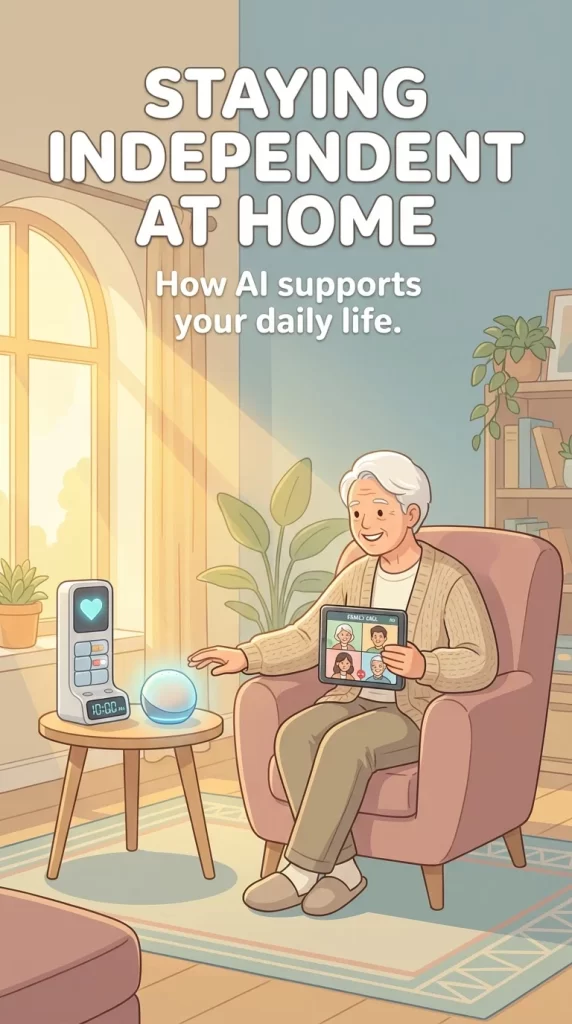
Modern AI can help keep you safe even when you aren’t thinking about it. There are now simple sensors that can be placed around the home. Some can detect if a stove has been left on too long, while others—like the Apple Watch—can detect if you’ve had a hard fall and automatically call for help or notify a family member. It’s like having a quiet, helpful assistant looking out for you 24/7.
Staying Connected Effortlessly
AI also makes it easier to see your loved ones. Instead of navigating confusing menus, you can just say, “Call my daughter on FaceTime.” The AI handles the “techy” part of connecting the call, leaving you free to enjoy the conversation. This helps prevent the feeling of isolation and keeps you involved in every family milestone.
Final Thoughts
Staying independent at home is all about having the right support. You don’t need to learn how a computer works to benefit from AI; you just need to know how to ask for what you need. By starting with one or two small tools—like a smart lightbulb or a voice reminder—you can build a home environment that supports your freedom and gives your family peace of mind. You’ve got this!